Via Ferrata Zimmereben – Huterlaner
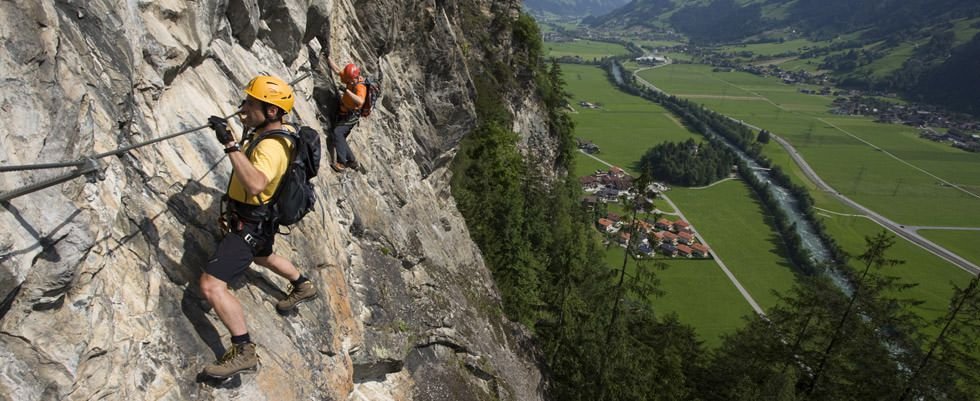
Suspended above the Zillertal Valley in Austria, the Zimmereben–Huterlaner Via Ferrata offers one of Tyrol’s most exhilarating mountain experiences. Perfectly combining vertical exposure, scenic beauty, and accessibility, it’s a route that allows climbers to feel the essence of alpine adventure without venturing into extreme terrain.
This via ferrata is a true showcase of what makes the Austrian Alps unforgettable — steep limestone walls, lush valleys, and a panoramic finish overlooking the village of Mayrhofen.
Trail Overview
Location: Mayrhofen, Tyrol, Austria
Type: Via Ferrata (fixed-cable climbing route)
Sections: Two main routes — Zimmereben and Huterlaner
Difficulty: C/D (intermediate to advanced)
Length: Approx. 450–500 m of climbing (Huterlaner)
Elevation gain: About 250 m
Duration: 1.5 to 2.5 hours for the climb
Orientation: South-facing wall
Best for: Experienced climbers or strong hikers with basic via ferrata experience
These two routes share the same starting zone near the Gasthof Zimmereben and can be combined or climbed separately. Both ascend the imposing rock face that rises directly above the Mayrhofen valley, offering spectacular exposure and views throughout.
Route Description
Approach
The approach starts near the Zimmereben Gasthof, located a short walk (about 20–30 minutes) from Mayrhofen’s center. The path leads through forested slopes before reaching the base of the cliff, where both routes begin side by side. Signposts clearly indicate the entrances to the Huterlaner and Zimmereben routes.
Huterlaner Route (C/D)
The Huterlaner via ferrata is slightly easier and shorter than its counterpart, but still offers a thrilling ascent. The route starts with vertical sections that immediately demand good balance and confidence. Steel rungs, pegs, and cables guide climbers through a mix of steep faces and traverses.
Midway, a short overhanging section tests upper-body strength, while rest points are well placed for recovery. The view expands dramatically as you climb higher — the green valley floor, the Ziller River, and the distant snow-capped peaks of the Tux Alps.
The final section becomes more exposed, finishing just above the Zimmereben Gasthof terrace, where many climbers reward themselves with a meal and a panoramic drink overlooking the valley.
Zimmereben Route (D/E)
The Zimmereben route is steeper, more direct, and physically demanding. It includes vertical and slightly overhanging segments that push endurance to the limit. This route is often described as more athletic, requiring constant focus and strength.
Both routes share the same descent path back toward Mayrhofen, following a steep forest trail that takes about 30–40 minutes.
Highlights
Spectacular panoramic views over the Zillertal Valley and Mayrhofen throughout the climb.
Two distinct routes allowing flexibility: the easier Huterlaner or the more challenging Zimmereben.
Excellent rock quality and modern safety equipment.
Accessible from the town center, making it perfect for a half-day alpine adventure.
Gasthof Zimmereben at the top, offering food and drinks with one of the best views in Tyrol.
Combination options with other via ferratas in the region, such as Pfeilspitzwand or Knorren Nadel.
Difficulty and Required Skills
Grade: Huterlaner C/D; Zimmereben D/E
Style: Vertical climbing with traverses and small overhangs
Exposure: High — continuous void underfoot
Requirements:
Good physical condition and upper-body strength
Solid footing on iron rungs and rock
No fear of heights
Familiarity with via ferrata safety systems
The routes are well-equipped with steel cables, iron steps, and anchors. A via ferrata set (Y-shaped lanyard, harness, and helmet) is mandatory. Gloves are strongly recommended for grip and comfort.
Beginners should start with Huterlaner and ideally be accompanied by a guide. The Zimmereben route is suitable for more confident climbers with prior via ferrata experience.
When to Go
Season: Late April to October (depending on weather and snow conditions)
Best conditions: May through September — dry rock and stable temperatures
Avoid after rain: Wet rock increases difficulty and risk.
Time of day: Early morning or late afternoon offers the best light and avoids the heat on this south-facing wall.
The routes are often busy during weekends and summer holidays. Weekdays or shoulder seasons (May, September) are ideal for quieter climbs.
Access and Logistics
Starting point: Mayrhofen, Tyrol, Austria
Nearest parking: Small lot near Gasthof Zimmereben or along the Ziller River (walking distance).
Public transport: Mayrhofen is easily reached by train via the Zillertalbahn from Jenbach (mainline connection).
Approach time: ~25 minutes from Mayrhofen to the via ferrata base.
Descent: 30–40 minutes along a marked forest trail.
Facilities: Restaurant and panoramic terrace at the Zimmereben exit point.
Local outdoor shops in Mayrhofen rent via ferrata gear, including harnesses and helmets. Guided tours are also available for those new to the sport.
Why It Belongs on Every Adventurer’s List
The Zimmereben–Huterlaner Via Ferrata embodies everything that defines alpine adventure — vertical exposure, pristine views, physical challenge, and pure exhilaration. Few routes offer such accessibility combined with authentic mountain atmosphere.
From the moment you step onto the first rung until you stand on the terrace above the valley, every movement is accompanied by a sense of awe. The contrast between the silence of the rock face and the distant sound of the valley below makes this experience unforgettable.
For climbers and thrill-seekers, the Zimmereben–Huterlaner Via Ferrata is not just a climb — it’s a dialogue with the mountains of Tyrol.