Via Ferrata Kaiserschild
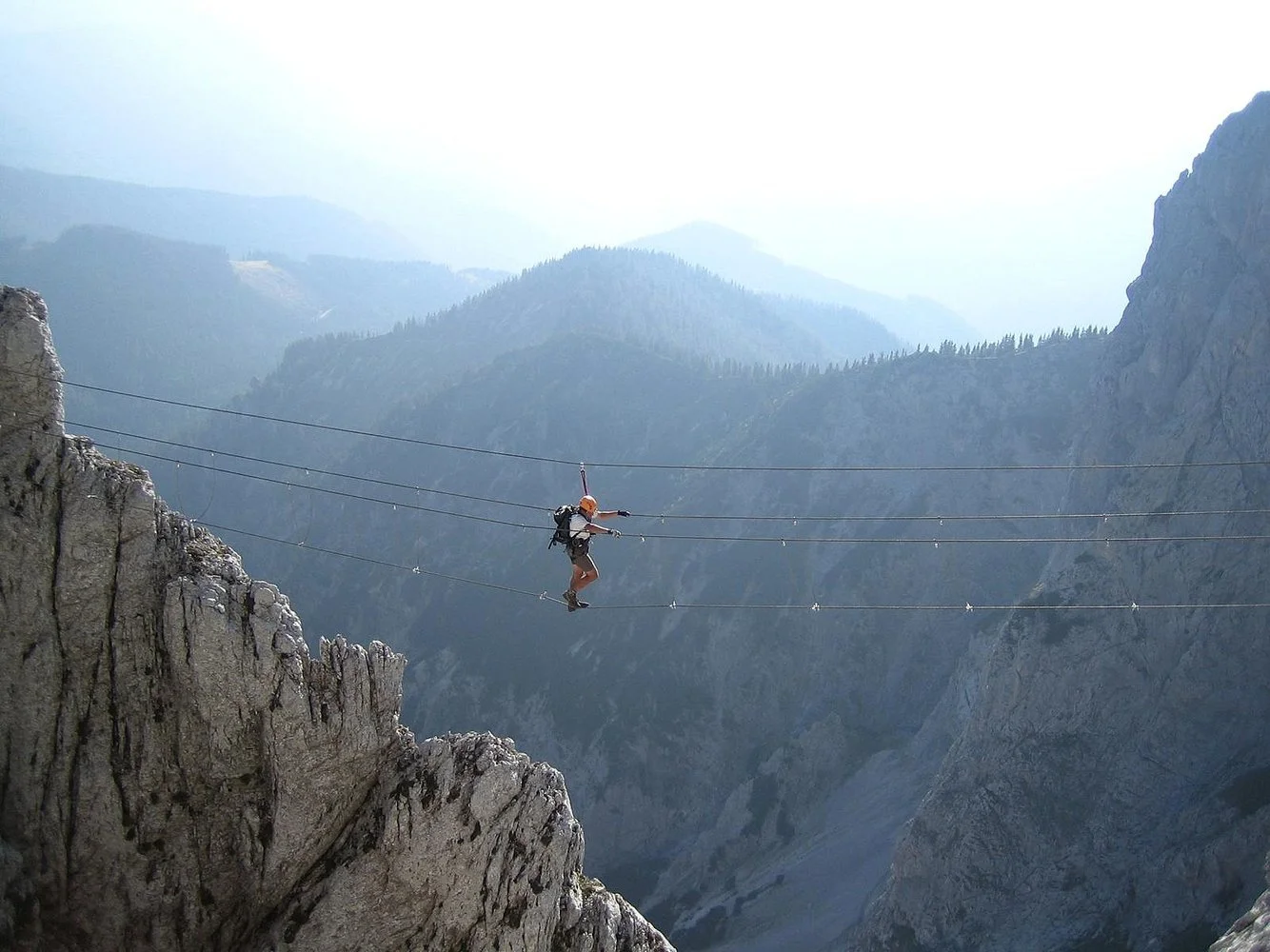
The Kaiserschild Klettersteig is a dramatic and demanding via-ferrata route located in the Ennstal Alps of Styria, Austria. Carved into the steep south-west face of the mountain known as Kaiserschild (2,084 m), this route offers serious climbers exposed terrain, thrilling features such as a long suspension bridge, and panoramic views of the surrounding region—including Eisenerz and the deep valley walls below. With high difficulty and technical demands, it stands out as one of the more extreme ferrata routes in the region.
Trail Overview
Location: Near Ramsau/Eisenerz, Styria, Austria.
Elevation gain: From approximately 1,015 m (parking/community starting point) to summit area 2,084 m — ~1,070 m of ascent.
Ferrata length / vertical climb: Approx. 270 m of via-ferrata climbing.
Difficulty rating: D/E (German/Austrian via ferrata rating scale) – very difficult to extremely difficult.
Total time: Approach ~1.5–2 h, ferrata climbing ~2 h, descent and return ~1.5–2 h; total outing ~5–6 h.
Route Description
The adventure begins at the parking area or mountain inn near Gemeindealm (Ramsau/Eisenerz). From there you follow a forest road (Forststraße) upwards into the woods, gradually becoming steeper and transitioning to scree or rock slopes as you approach the base of the wall.
At the marked entry for the Kaiserschild Klettersteig you clip into the steel cable and begin the secured section. The route immediately shows its serious nature: vertical and overhanging sections with high exposure dominate the early part. The path proceeds through steep upcoming terrain, traverses, solid rock plates, and occasional metal footholds and grip bars.
Mid-way there is the now-famous “Nepal bridge” (a suspension bridge of steel cables) of around 35 m length, over a void, requiring concentration and surefootedness.
Post‐bridge, the route continues up a final steep wall towards near the summit. The descent follows a normal alpine path down from the summit ridge, returning via a different route or zig-zag path to the starting area.
Highlights
Exceptional exposure and panoramic views: the ascent is on a major limestone face with view down into the valley, making every clip-in and step dramatic.
The suspension bridge: a standout feature that adds a thrilling element beyond standard via ferrata terrain.
Solid rock and high-caliber climbing: rare to find a via ferrata in this region combining steep slabs, overhangs and long secured verticality.
Rewarding summit: reaching the top of Kaiserschild at 2,084 m brings a deep sense of accomplishment and scenic payoff.
Uncrowded compared with more “tourist” ferratas; the challenge itself filters out casual participants, giving a more focused mountain experience.
Difficulty & Required Skills
This route is categorized as D/E, meaning it is very difficult to extremely difficult in via-ferrata grading. Key requirements:
Excellent fitness and endurance for sustained vertical climbing and high exposure.
Technical familiarity with via-ferrata equipment: harness, helmet, via-ferrata lanyard, gloves, ideally trekking poles for approach/descent.
Good rock climbing sense and sure-footedness: many sections require strong arms, good balance, and confident movement on vertical or overhanging terrain.
Mental composure: exposure is high, falls would be serious; comfort at height and in exposed settings is essential.
Navigation and mountain sense: although route is marked and secured, the approach and descent require alpine path skills, sometimes over scree or unsecured terrain.
This route is not suitable for beginners or those with limited via-ferrata experience.
When to Go
The optimal season for the Kaiserschild Klettersteig is from June through October, once snow has melted from the wall face and conditions are stable.
Early summer brings full daylight and warmer rock, but be aware of potential lingering snow in the approach zone. Late season (autumn) can offer crisp air and quieter conditions but also earlier afternoon weather changes and reduced daylight.
Checking weather conditions is imperative: avoid climbing in wet or stormy weather as rock becomes slick, and thunderstorms pose serious hazard.
Access & Logistics
Getting there: Drive or take transit to Ramsau/Eisenerz in Styria, Austria. From Ramsau follow signage to Gemeindealm. Park at the designated lot or near the mountain inn.
Approach path: Follow forest road from about 1,015 m elevation up to the Bärenlochsteig and then to the ferrata start. The approach is about 1.5–2 h depending on pace.
Descent: From the summit or end of ferrata follow the normal trail back down; return to parking area about 1.5–2 h.
Equipment required: Full via-ferrata set (harness, helmet, via-ferrata kit), gloves, good hiking or climbing shoes. Pack also water, snacks, altitude clothing, and check condition of gear.
Safety tips: Start early to avoid afternoon storms, avoid heavy packs during the ferrata climb, respect rope etiquette if others are on route, and always clip proper points.
Why It Belongs on Every Adventurer’s List
The Kaiserschild Klettersteig offers more than a hike—it is an adrenal-charged ascent into alpine adventure. For those who relish exposure, vertical terrain, and the tangible thrill of climbing on secured rock, this route delivers. It sets itself apart with its combination of length, ascent gain, difficulty and setting—rising above a deep valley in the Ennstal Alps and culminating on a proud summit. It pushes the boundary of what a via-ferrata can be: part climb, part mountain trek, part adventure. For advanced climbers looking to mark a memorable route among Austria’s top offerings, Kaiserschild stands as a worthy contender.
Completing the ascent not only brings the exhilaration of the fixed cables and steps, but also the profound satisfaction of having navigated one of the region’s steeper and more specialized routes. It’s the kind of mountain experience that stays with you—not just for the summit photo, but for the journey up, the breath catching on the suspension bridge, the muscles burning on the vertical slab, and the valley unfolding below.