Via Ferrata Les Diablerets – Tête aux Chamois
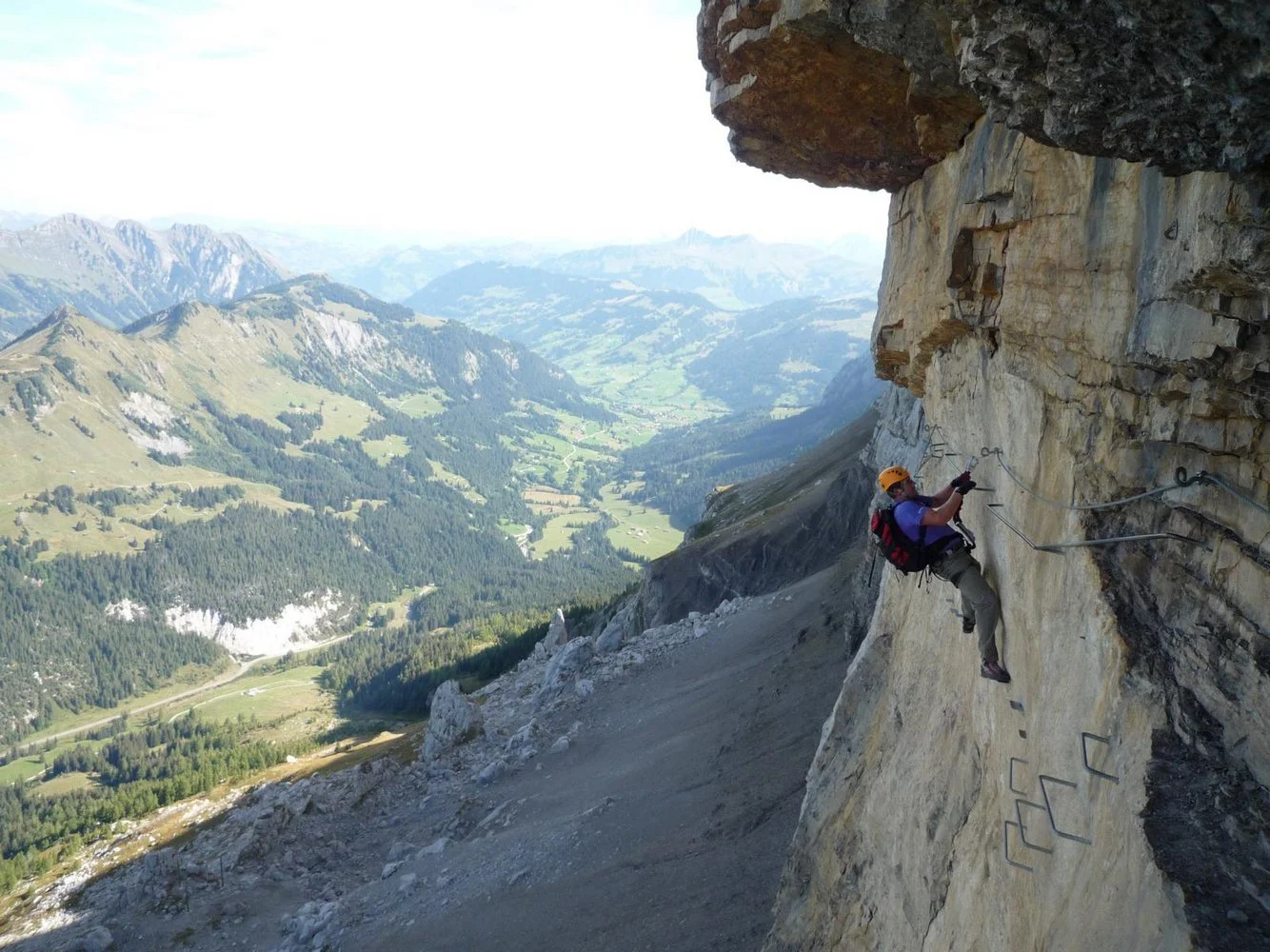
The Via Ferrata Les Diablerets – Tête aux Chamois is one of the most scenic and accessible ferratas in the Vaud Alps, offering a stunning ascent along limestone walls with panoramic views over Les Diablerets, Glacier 3000, and the surrounding peaks. Well-equipped and varied, it combines airy traverses, vertical walls, and exposed ledges without ever feeling overwhelming for intermediate climbers. Its proximity to lift access and the dramatic Alpine backdrop make it an ideal objective for those seeking a memorable day at elevation.
Trail Overview
Duration: 2 to 3 hours on the via ferrata itself, plus 1 hour for approach and return.
Difficulty: AD (intermediate). Vertical sections, moderate exposure, secure equipment.
Best for: Intermediate climbers with basic via ferrata experience; adventurous beginners accompanied by experienced partners.
Exposure: High in the mid and upper sections, with several airy traverses and vertical steps.
Required gear: Certified via ferrata lanyard set, climbing harness, helmet, gloves, sturdy mountain footwear, weather-appropriate clothing.
Route Description
The route begins near the Col du Pillon, where a short approach leads to the base of the limestone face. The initial meters are moderate and serve as a warm-up, with spaced rungs and sloping ledges leading to the first vertical step.
The mid-section introduces more sustained climbing: long vertical ladders, exposed traverses, and steep walls that require steady footwork and comfort with exposure. The rock quality is solid, and the cable is continuous, ensuring secure progression. Several natural pauses allow climbers to enjoy the sweeping views toward the Diablerets massif.
The final section steepens before easing into a finishing ridge, where the terrain transitions from technical climbing to a short hike. The route tops out on the Tête aux Chamois plateau, offering expansive vistas over Glacier 3000 and the surrounding high-alpine landscape. From here, a marked path leads back toward lift infrastructure or the descent route.
Highlights
Dramatic limestone walls with continuous panoramic views.
Airy mid-section with scenic traverses and vertical exposure.
Direct access to the high-alpine plateau near Tête aux Chamois.
Excellent equipment and modern cable protection.
Option to combine the route with other hikes or viewpoints around Glacier 3000.
Difficulty and Required Skills
This via ferrata is graded AD (fairly difficult), making it suitable for those who have previous experience on fixed routes. Climbers should be comfortable with vertical sequences, moving efficiently along cables, and managing exposure. Good physical conditioning, balance, and confidence on steep terrain are recommended. Beginners should only attempt the route with guidance from an experienced climber or professional.
When to Go
The ideal season is from late June to early October, depending on snow conditions. Weather changes quickly at this altitude, so stable, dry conditions are essential for a safe ascent. Avoid the route during storms, wet rock, or strong winds, as exposure is significant throughout.
Access and Logistics
The starting point is near Col du Pillon, accessible by car or public transport. Parking is available at the base of the Glacier 3000 lift. A short marked path leads to the start of the via ferrata. At the top, climbers reach the Tête aux Chamois plateau, from which they can either descend on foot along a marked trail or return via lift infrastructure, depending on seasonal operations. Always check lift schedules and local conditions before starting.
Why It Belongs on Every Adventurer’s List
This route captures the essence of the Swiss Alps: crisp air, spectacular scenery, and a thrilling yet approachable challenge. It is an ideal blend of adventure and accessibility, offering a rewarding experience without requiring elite climbing skills. Its spectacular views and high-quality construction make it a standout objective for anyone exploring the region.