Via Ferrata Graustock
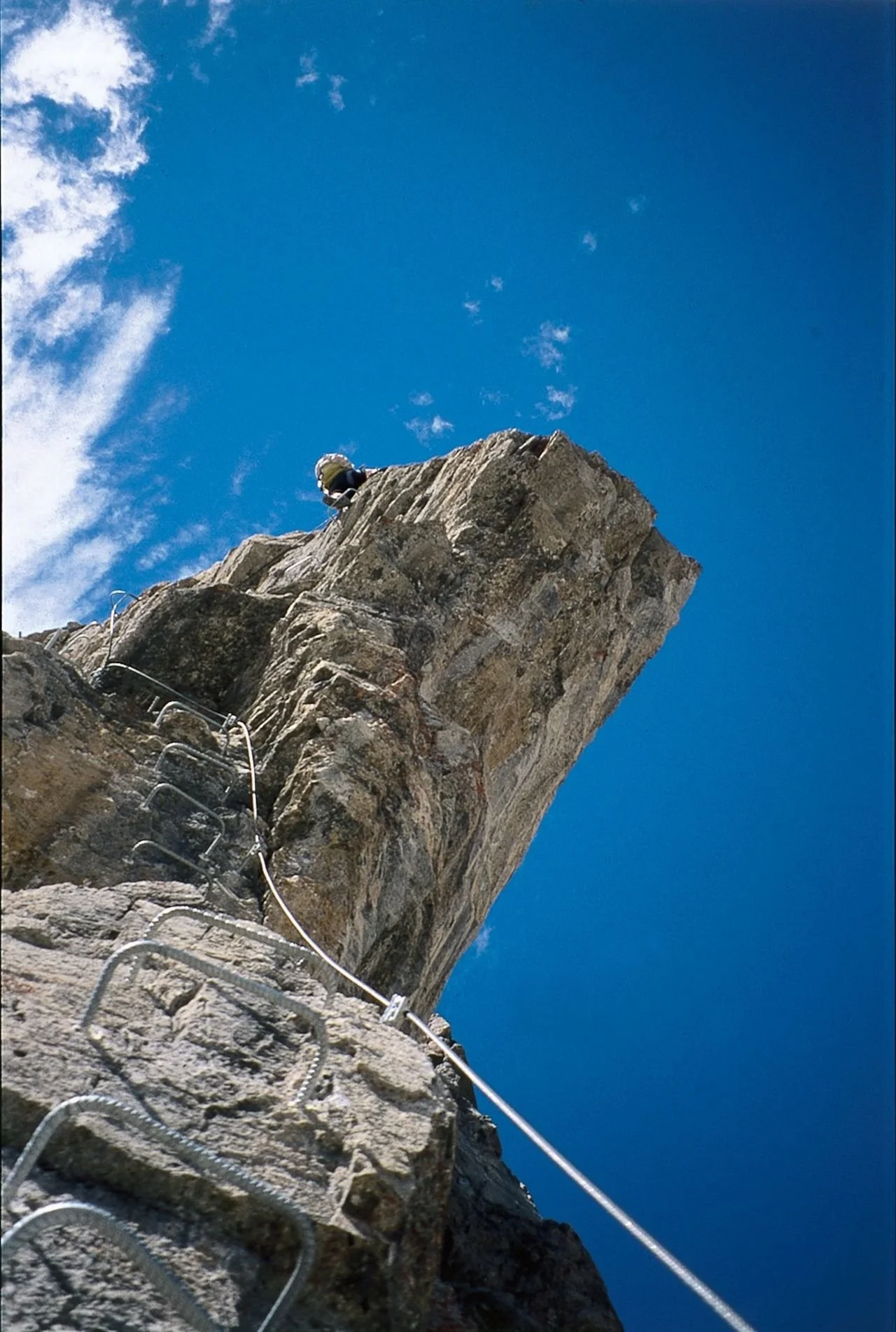
Nestled above the alpine resort of Engelberg in Central Switzerland, the Via Ferrata Graustock is a striking ridge ascent culminating on the summit of Graustock (2 662 m). Combining sections of sheer rock face, airy ridges, and panoramic alpine views, this route offers climbers a serious adventure in a high-mountain environment. Accessible yet demanding, it bridges the gap between a mountain hike and a full alpine climb.
Trail Overview
Name: Via Ferrata Graustock (Graustock Klettersteig)
Location: Engelberg region, Canton Obwalden/Nidwalden, Switzerland
Summit altitude: 2 662 m.
Difficulty rating: K4-5 (via ferrata grading) / T4 (Swiss hiking scale for alpine hiking).
Ascent time: Approx. 2–3 hours from the start of the via ferrata sections.
Altitude gain (via ferrata part): ~260 m for the secured climbing section.
Season: Typically from end of June to early October (weather and snow-conditions permitting).
Route Description
The route begins from the Jochpass plateau (2 207 m) or the upper station accessed via Trübsee/Engelberg. From there you follow white-blue-white marked mountain trail sections toward the south-east ridge of Graustock.
Approach to the via ferrata start – After the chairlift or cable station at Jochpass, a short hike leads to the base of the secured section. The initial mountain path is steeper than it looks but straightforward.
First climbing section – You arrive at Rot Nollen (~2 310 m) and clip in to the cables. A mix of rock and fixed ladder/iron rungs lead you up to Schafberg (~2 522 m).
Main pillar / central crux – This is the standout section: a steep exposed pillar of around 70-80 m with significant air below and cable/iron assists. It’s rated K5 in part.
Final ridge to summit – After the main pillar you proceed along the ridge, some mixed terrain of scree and rock, cables assist across the final rock steps. Summit cross awaits at 2 662 m.
Descent – From the summit you can descend back toward Jochpass via the marked trail through Schaftal valley, following the white-blue-white route initially then white-red-white on the standard valley path. The descent takes ~1-1.5 hours.
Highlights
Spectacular exposure: The central pillar offers thrilling moments high above the valley with free air beneath you—an exhilarating via ferrata experience.
Panoramic mountain views: From the summit ridge you look out toward Titlis, Spannort, Rigi, Pilatus and into the Bernese Alps including peaks like Wetterhorn, Schreckhorn and Finsteraarhorn.
Ridge grandeur: The ascent traces a dramatic ridge line which gives that alpine atmosphere of being on the crest of the mountain, not merely a path around it.
Access via great lift system: The ease of reaching Jochpass makes the adventure more accessible, yet the route remains full alpine in character.
Combination of terrain types: Mountain trail, via ferrata cables, ridge walking, exposure, and altitude – an engaging mix for an advanced day adventure.
Difficulty & Required Skills
This route is not for beginners. Key considerations:
Grading: K4-5 on the via ferrata scale (roughly advanced).
Swiss hiking scale: T4 (alpine hiking) for non-secured parts, meaning terrain is steep, exposed, and requires surefootedness and good orientation.
Skills required: comfortable with exposure, confident in using via ferrata equipment (harness, lanyards, helmet), good fitness for continuous climbing sections, capable of descending safely.
Additional risks: late season snow patches might remain near the ridge; weather can change fast; descending via exposed scree or ridges requires caution.
Equipment: via ferrata set (harness, energy-absorbing lanyard), helmet, gloves, climbing boots or stable mountain boots, possibly a lightweight rope if guiding others.
Mental factors: While many sections are secure, the exposure and verticality mean that climbers must be mentally comfortable with height and steep terrain.
When to Go
The best season runs roughly end of June to early October, depending on snow melt and weather.
Early season (late June): Fewer crowds, but snow may linger on parts of the ridge—check conditions.
Mid-season (July-August): Most reliable conditions and warmest weather but busier as part of the Engelberg area offerings.
Late season (September): Crisp alpine air, fewer people, dramatic light—but shorter days and risk of early snow.
Always check current weather and mountain conditions before attempting. The route should be avoided in thunderstorms or unstable weather due to exposure.
Access and Logistics
Starting point: Engelberg, Switzerland. From Engelberg you take cable car or chairlift to Trübsee, then onward chairlift to Jochpass (~2 207 m).
Route to start: From Jochpass station follow the marked trail (white-blue-white) to the via ferrata start.
Duration: From Jochpass to summit via ferrata: around 2–3 hours ascent. Descent back to Jochpass ~1–1.5 hours. Total day trip possible.
Equipment rental: At Engelberg valley station or at Berghaus Jochpass you can hire via ferrata gear (harness, lanyard, helmet).
Transport / return: After descent to Jochpass you can return via lifts/cable cars to Engelberg or follow the trail down to valley.
Accommodation: Options in Engelberg village; for early start you may stay overnight in Engelberg.
Safety: Ensure you have navigation (map, mobile), alpine weather awareness, trekking poles for approach and descent can help.
Why It Belongs on Every Adventurer’s List
The Via Ferrata Graustock offers a perfect blend of alpine climb and via-ferrata challenge in a single day, set in one of Switzerland’s most dramatic ridge landscapes. For anyone wanting to step up from standard mountain hikes to something with steeper terrain, greater exposure, and true alpine character, this route delivers.
You’ll gain a sense of summit achievement above 2 600 m, travel through varied terrain (trail + secured climb + ridge), and experience one of the finest panoramic views of the Swiss Alps — all anchored off a reliable lift access point. It’s an adventure that pushes the climber-hiker boundary and leaves vivid memories.
For those who yearn for more than just a walk, this via ferrata offers heart-rate-raising moments, spectacular ridgelines, and the reward of conquering a real mountain peak. In short: it’s one for the list of must-do alpine adventures.