Via Ferrata Brunnistöckli
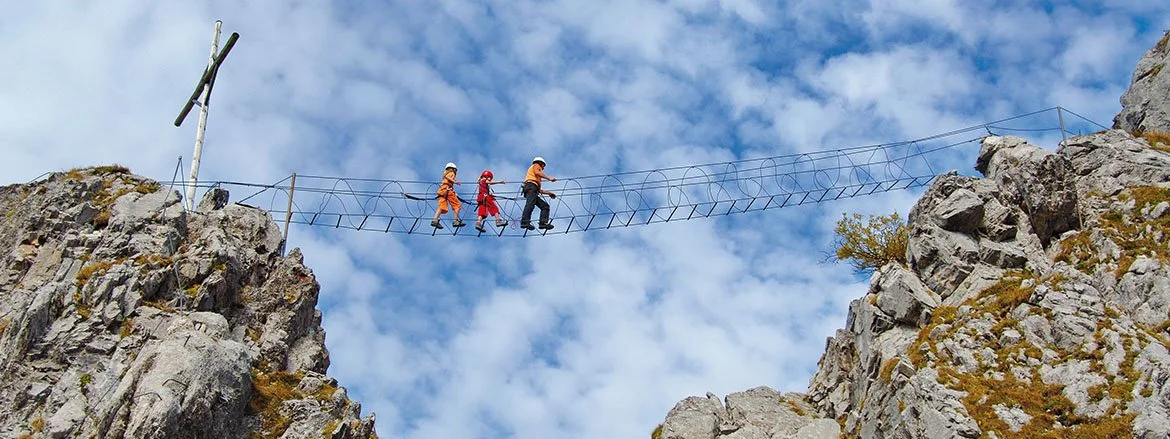
High above the valley floor near Engelberg in Switzerland, the Brunnistöckli via ferrata offers adventurers an exhilarating introduction to the world of iron-paths (Klettersteige). At roughly 2,030 m elevation, this route combines dramatic exposure with manageable difficulty, making it particularly suitable for beginners, families and those seeking an alpine experience without the commitment required for more serious climbs.
Trail Overview
Name: Via Ferrata Brunnistöckli (often “Klettersteig Brunnistöckli”)
Location: Above Brunni / Engelberg, Obwalden, Switzerland
Summit Elevation: Approximately 2,030 m
Vertical Gain: About 200 m of climb from the lift station of the chair-lift.
Rated Difficulty: K2 (on the Klettersteig-scale) or comparable to beginner/moderate level via ferrata.
Duration: Approx. 45 min climb from the access point, plus 15 min approach and ~20 min descent. Total time around 1 hour.
Purpose: A well-protected, relatively short via ferrata designed to provide exposure and fun rather than demanding technical challenge. Ideal for first-time via ferrata participants.
Route Description
From the top station of the Brunni-chairlift (above Engelberg) one follows the marked “Brunnipfad” trail towards the Rugghubelhütte SAC, arriving at the signposted entry point of the via ferrata.
Once at the access, the route begins with a series of iron rungs and footholds climbing the rock face. Initially the terrain is modest but steadily gains exposure. After a short ascent you cross the first of two notable features: a three-cable suspension bridge (~8 m long) that spans a gap in the rock. The sensation of hanging over the drop adds the “via ferrata thrill”.
After the suspension bridge the climb continues a little steeper for a short section until you reach the second major highlight: a long hanging bridge that leads across a chasm to the summit ridge of the Brunnistöckli. This final section delivers panoramic views over Engelberg valley and the surrounding peaks, including the Titlis massif.
Upon reaching the summit ridge (~2,030 m) you exit the protected iron-path and follow a marked hiking path down via Schonegg back to the Brunnihütte (1,860 m) or the lift station. The descent is well marked with white-blue-white trail signage and takes approximately 20 minutes.
Highlights
Suspension Bridges: The three-cable bridge and the larger hanging bridge provide memorable “wow” moments—ideal for first-timers and family groups alike.
Panoramic Views: At the top, you’re treated to sweeping views of the Engelberg valley, alpine meadows, and ridges of the Urner Alps.
Short Commitment: With under 1 hour climbing and an easy approach, this route offers alpine exposure in a compact format.
Beginner Friendly: Designed for newcomers to via-ferrata, it offers an accessible way to gain confidence on iron-paths.
Family Friendly: Frequently used by families and guided groups, enabling children with sure-footedness and no vertigo to participate.
Difficulty & Required Skills
Though labelled as an entry level via ferrata, Brunnistöckli still demands respect and basic alpine competence:
Skill level: Rated K2 in the Swiss classification system.
Physical ability: Requires moderate upper body strength (for using iron rungs and going over suspension bridges), and good balance.
Mental preparation: Exposure to heights is present—especially on the bridges and ridge. Comfort with being on an exposed rock face is recommended.
Equipment: Full via-ferrata set (harness, helmet, lanyard), good footwear (mountain boots or rigid hiking boots) and gloves for comfort. The provider strongly recommends proper gear.
Footing: The route is well secured with steel cables and fixed anchors. The approach and descent are via marked trails rather than vertical climbing.
Not for complete novices: While beginner-friendly, absolute first-time climbers should consider going with a guide or in a group for safety and confidence.
When to Go
Season: Typically from early May through mid-October. Outside this window snow or ice may render the route unsafe or closed.
Weather: Best done on clear, dry days; avoid during rain, thunderstorms or strong winds which make hanging bridges and rock faces hazardous.
Time of Day: Early morning or late afternoon are preferable to avoid sun-exposure at the bridges and crowds.
Avoid peak conductor times: If planning family or group outings, mid-week visits may offer quieter experience.
Access & Logistics
Base town: Engelberg (Obwalden, Switzerland). Easily reachable by train from Lucerne or by car via the A2 motorway exit “Stans / Engelberg”.
Lift access: From Engelberg, take the Brunni-chairlift (Brunni-Bahnen) to the top station, then follow the Brunnipfad trail to the via ferrata entry.
Equipment rental & guidance: Via ferrata sets can be rented at Kräuterhütte or through Brunni-Bahnen. Guided tours and courses are available for families and beginners.
Descent: After the via ferrata, follow the marked trail (white-blue-white) down to Schonegg and onward to the Brunnihütte or lift station.
Timing: Allow a half-day for the outing including transport, ascent on lift, via ferrata, descent and return.
Safety note: Check lift operating hours, weather forecast and rockfall warnings before attempting the route.
Why It Belongs on Every Adventurer’s List
The Brunnistöckli via ferrata captures the essence of an alpine adventure in a compact yet thrilling format. It allows those who may not commit to multi-day expeditions or high-grade climbs to experience the excitement of hanging bridges, exposure, and mountain rock face in a relatively accessible, safe environment. It bridges the gap between hiking and climbing, offering a taste of vertical terrain, panoramic reward, and alpine atmosphere. For adventurers seeking to up-their game, build confidence in via ferrata techniques, or enjoy a memorable mountain outing with family or friends—this route is a perfect entry. Moreover, its combination of alpine vistas, engineered route elements and natural setting makes it an unforgettable experience that resonates with anyone drawn to the mountains.