Yakushi-sawa-goya (薬師沢小屋)
080-1951-3030
☎️
080-1951-3030 ☎️
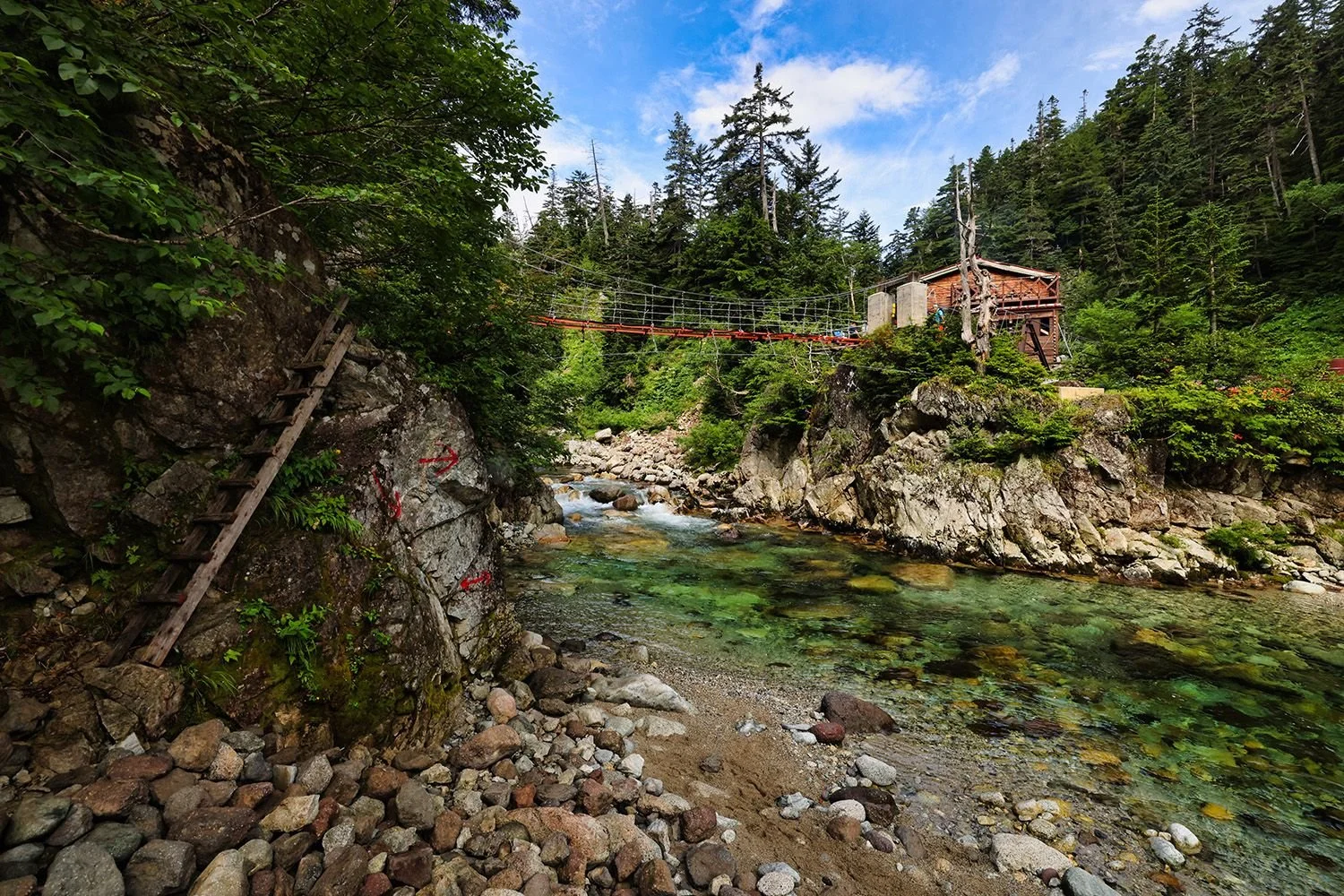
Yakushi-sawa-goya is a classic deep-valley stage hut in the Northern Japanese Alps, set at the dramatic confluence of the Kurobe headwaters and Yakushi-sawa. It’s best understood as strategic infrastructure: a key overnight node linking major interior hubs such as Taro-daira-goya and Kumono-daira-sanso, used by traverse parties moving through one of Japan’s most committing backcountry corridors.
-
Location: Kurobe headwaters / Yakushi-sawa confluence, Northern Japanese Alps, Japan
Altitude: 1,920 m
Type: Mountain hut (ridge/valley traverse stage hut)
Capacity: 60 sleeping places
Season: Typically summer to early autumn (varies by year; check current opening dates)
Reservations: Commonly operated as reservation-based in peak season
-
Yakushi-sawa-goya is rarely a “single-day destination.” It’s usually reached as part of longer traverses through the Kurobe interior.
Typical traverse context: between Taro-daira-goya and Kumono-daira-sanso (and onward toward Mitsumata / Suisho networks)
Terrain character: valley travel, river crossings/bridges, and long stages between shelters (commitment increases quickly once you’re inside the headwaters)
Difficulty: T3 (primarily due to remoteness, timing, and weather, rather than technical climbing)
-
Functional, practical, and built for people moving through.
Dormitory-style accommodation + dining/common room
Typical “hub” essentials: basic shop items and managed services (season-dependent)
Communication: many listings describe limited/none mobile signal in this interior zone (plan as if offline)
-
Expect an operational traverse atmosphere: early dinners, early sleep, and mornings built around weather windows and long stages. The river setting adds a uniquely “deep Alps” feel—less panoramic drama, more raw headwaters energy.
-
Yakushi-sawa-goya is especially relevant for:
Kurobe headwaters traverses (linking major interior huts)
Parties moving between the Yakushi-dake region and the deeper Kumonodaira / Kurobe interior networks
A “reset point” before committing to longer, more isolated stages
-
Best season: July to September (most reliable operations and conditions)
Main risks: swollen rivers after heavy rain, rapid weather changes, and the simple fact that retreat options are limited once you’re deep in the network.
-
Experienced hikers doing multi-day Northern Alps traverses
Parties comfortable with remote logistics and long stage planning
Trekkers who value strategic positioning over summit comfort
Why This Hut Is Worth Visiting
At 1,920 m with 60 beds, Yakushi-sawa-goya is one of the most important “connector huts” in the Kurobe interior: it turns brutally long headwaters itineraries into manageable stages, while placing you in a rare environment—Japan’s river-source wilderness rather than a tourist ridge line.