Via Ferrata delle Trincee
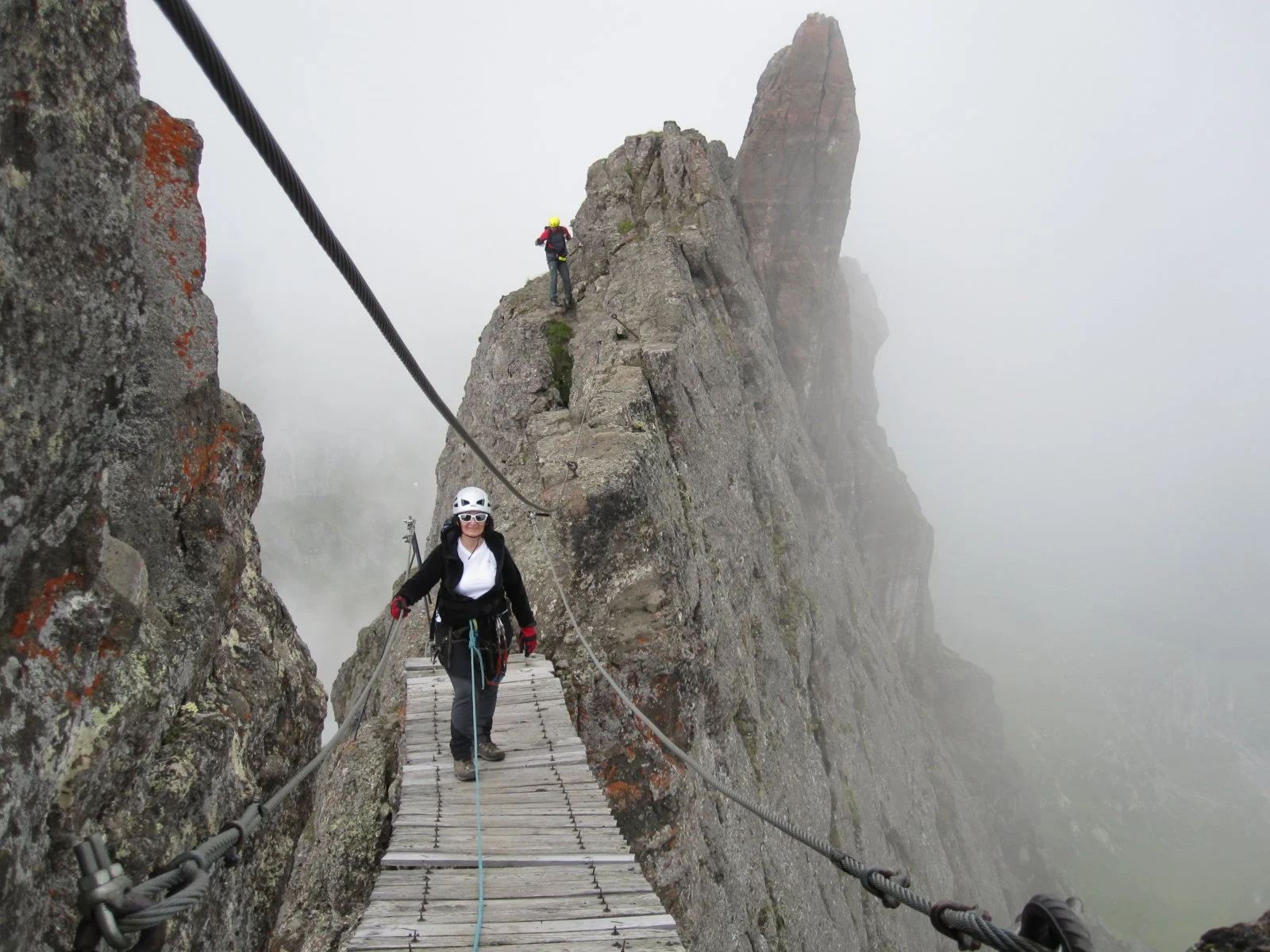
Via Ferrata delle Trincee is one of the most dramatic and historically rich routes in the Dolomites. Set above the Marmolada massif and overlooking the Fedaia Pass, it combines exposed ridgelines, rugged volcanic rock, and preserved World War I trenches that give the route its name. This itinerary delivers a mix of alpine adventure, sweeping Dolomite panoramas, and an immersive step into history, making it one of the most iconic ferratas in northern Italy.
Trail Overview
Duration: 3 to 4 hours for the via ferrata section, 5 to 6 hours including the full loop
Difficulty: High; commonly rated D (difficult) with exposed traverses and strenuous vertical sections
Best for: Experienced via ferrata climbers seeking a technical alpine route with historical elements
Exposure: Very high; narrow ridges, deep voids on both sides, and exposed ledges
Required gear: Standard via ferrata kit (EN-certified harness, lanyard with energy absorber, helmet, gloves), sturdy mountain boots, weather-appropriate layers; optional: short rope for less experienced partners
Route Description
The route typically begins at Passo Fedaia, approaching the starting point via a well-marked trail that ascends towards the Porta Vescovo ridge. Once clipped into the steel cable, the ferrata immediately sets the tone with steep volcanic rock walls and airy traverses.
The first section involves vertical ladders, exposed ledges, and demanding pulls over blocky terrain. As the route gains the main ridge, the scenery becomes increasingly dramatic, with the Marmolada glacier dominating the horizon.
Midway, the itinerary passes through preserved World War I tunnels and trenches carved directly into the rock. This historical detour provides a moment of shelter and contrast before returning to exposed climbing.
The final portion follows a narrow ridge with continuous exposure before descending on a combination of aided and non-aided terrain toward Rifugio Padon or looping back toward the Fedaia area.
Highlights
Elevated ridge offering uninterrupted views of Marmolada, Sella Group, and Civetta
Well-preserved WWI trenches and tunnels integrated naturally into the route
Dramatic volcanic rock features unusual within the Dolomite landscape
Highly exposed and athletic sections that appeal to advanced ferrata climbers
Opportunity to link the route with scenic hikes around Passo Fedaia or Rifugio Padon
Difficulty and Required Skills
Via Ferrata delle Trincee is rated D and is considered one of the more challenging standard ferratas in the Dolomites. Climbers should be comfortable with:
Sustained exposure on ridges and vertical walls
Using upper-body strength on steep sections
Stable footwork on small holds and rough volcanic rock
Managing fatigue over several hours
Navigating enclosed tunnels and uneven historic passages
This route is not suitable for beginners. Strong physical conditioning and prior experience on C/D-level ferratas are recommended.
When to Go
The best period is late June to late September, when the ridge is generally snow-free and the weather more stable. Early-season or late-season attempts may encounter snow patches, strong winds, or icy conditions, which significantly increase difficulty. Afternoon storms are common in summer, so early starts are advised.
Access and Logistics
The route begins at Passo Fedaia (2,057 m), which is accessible by car from Canazei, Arabba, or Alleghe. Parking is available near Lago Fedaia.
The approach to the start takes 45 to 60 minutes, depending on the chosen trail. The descent can be made toward Rifugio Padon or back down to Fedaia, forming a loop.
Water and food supplies are limited along the route; nearby huts such as Rifugio Padon or Rifugio Castiglioni Marmolada provide services during the summer season.
Weather check is essential due to the ridge’s full exposure to wind and storms.
Why It Belongs on Every Adventurer’s List
Via Ferrata delle Trincee offers a rare blend of physical challenge, historical immersion, and uncompromising alpine scenery. Few ferratas combine exposed ridge climbing with preserved wartime architecture in such a dramatic setting. For experienced climbers seeking a route that captures the spirit of the Dolomites—raw, vertical, panoramic, and deeply tied to history—this is an unforgettable ascent.