Via Ferrata Pidinger
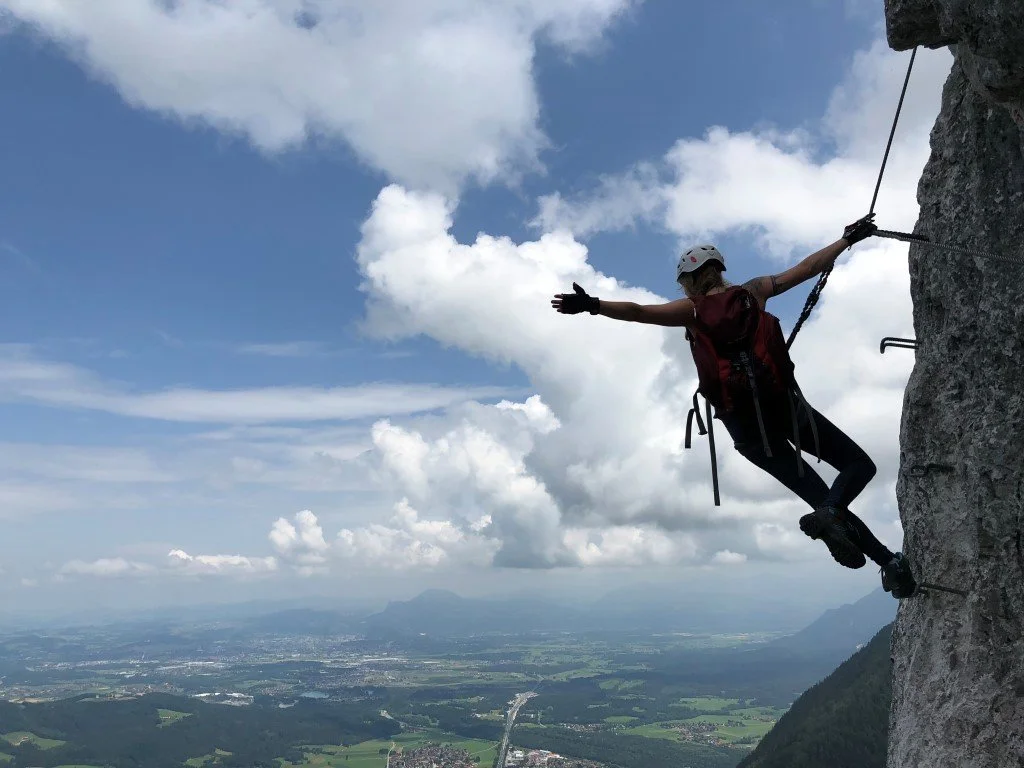
The Via Ferrata Pidinger, located above the village of Piding on the German–Austrian border, is one of the longest and most demanding modern via ferrata routes in the Northern Alps. Known for its sustained exposure, impressive limestone walls, and athletic movement, it offers a serious alpine challenge for experienced climbers. Rising along the steep northern face of the Hochstaufen (1,771 m), this route rewards perseverance with striking views over the Berchtesgadener Alps and the Salzach Valley.
Trail Overview
Duration:
6 to 9 hours total, depending on fitness, weather, and traffic. Expect 4–6 hours on the ferrata itself, plus approach and descent.
Difficulty:
D/E (very difficult) with long continuous sections and limited resting points.
Best for:
Highly experienced via ferrata climbers seeking a long, technical, and exposed route. Not suitable for beginners.
Exposure:
Extremely high throughout. Vertical walls, traverses over voids, and several points with significant air beneath the climber.
Required Gear:
Certified via ferrata set (energy-absorbing lanyard), helmet, climbing harness, gloves, sturdy alpine footwear. Strongly recommended: lightweight climbing shoes for precision, plenty of water, layers for rapid weather changes.
Route Description
The approach begins from Urwies near Piding, leading through forested terrain before steepening as the path reaches the base of the northern face. The route starts immediately with athletic climbing, offering little warm-up. Early sections include vertical ladders and direct faces that quickly test endurance.
The middle segment is characterized by continuous vertical and slightly overhanging passages. The cable is well-maintained, but natural footholds can be small and polished from use. This section contains the route’s defining challenge: sustained D/E climbing with virtually no escape options.
Higher on the wall, the terrain becomes more varied with exposed traverses, airy corners, and narrow ledges. Although the difficulty slightly decreases near the top, fatigue becomes a major factor. The ferrata ends just below the Hochstaufen summit ridge, from where a short hike leads to the peak.
The descent follows a separate alpine path, steep in parts, requiring stable footing and caution, especially in wet conditions.
Highlights
One of the longest and most sustained ferratas in Germany.
Impressive vertical faces with expansive views over Bavaria and Salzburg.
A true endurance route with consistent difficulty and exposure.
The rewarding summit of Hochstaufen provides a classic alpine finish.
Difficulty and Required Skills
The Pidinger is graded D/E, placing it among the hardest via ferratas in the region. Climbers must possess:
Excellent fitness and endurance for prolonged vertical terrain.
Strong mental composure in exposed environments.
Advanced technique for small footholds, push-pull movements, and traverses.
Experience handling long ferratas without rest points.
Awareness of weather and ability to make safe decisions in alpine conditions.
This is a committing route with no intermediate exits; only well-prepared climbers should attempt it.
When to Go
The ideal season is late spring to early autumn (May to October), depending on snow conditions. Early mornings offer cooler temperatures and reduced crowding. Avoid the route in wet weather, thunderstorms, or high winds, as the steep walls become hazardous and escape is nearly impossible once committed.
Access and Logistics
Starting Point:
Parking area near Urwies, Piding (Germany). Clear signage leads toward the Hochstaufen paths and the ferrata approach.
Approach:
Approximately 1–1.5 hours on steep forest and rocky paths.
Descent:
The standard descent follows the south-side hiking path, often via the Reichenhaller Haus area, before looping back toward Piding. Allocate 2–3 hours.
Additional Notes:
Bring sufficient water; there are no reliable sources on the route.
Start early to avoid afternoon storms and allow enough time for the descent.
Weekends can be busy; traffic may slow progress on the difficult sections.
Why It Belongs on Every Adventurer’s List
Via Ferrata Pidinger is a benchmark route that combines technical challenge, alpine exposure, and exceptional length. It pushes climbers physically and mentally, offering the type of achievement that remains memorable long after the climb is complete. For those seeking one of the most iconic and demanding via ferrata experiences in the German Alps, the Pidinger stands as a true testpiece.