Via Ferrata Höhenglücksteig
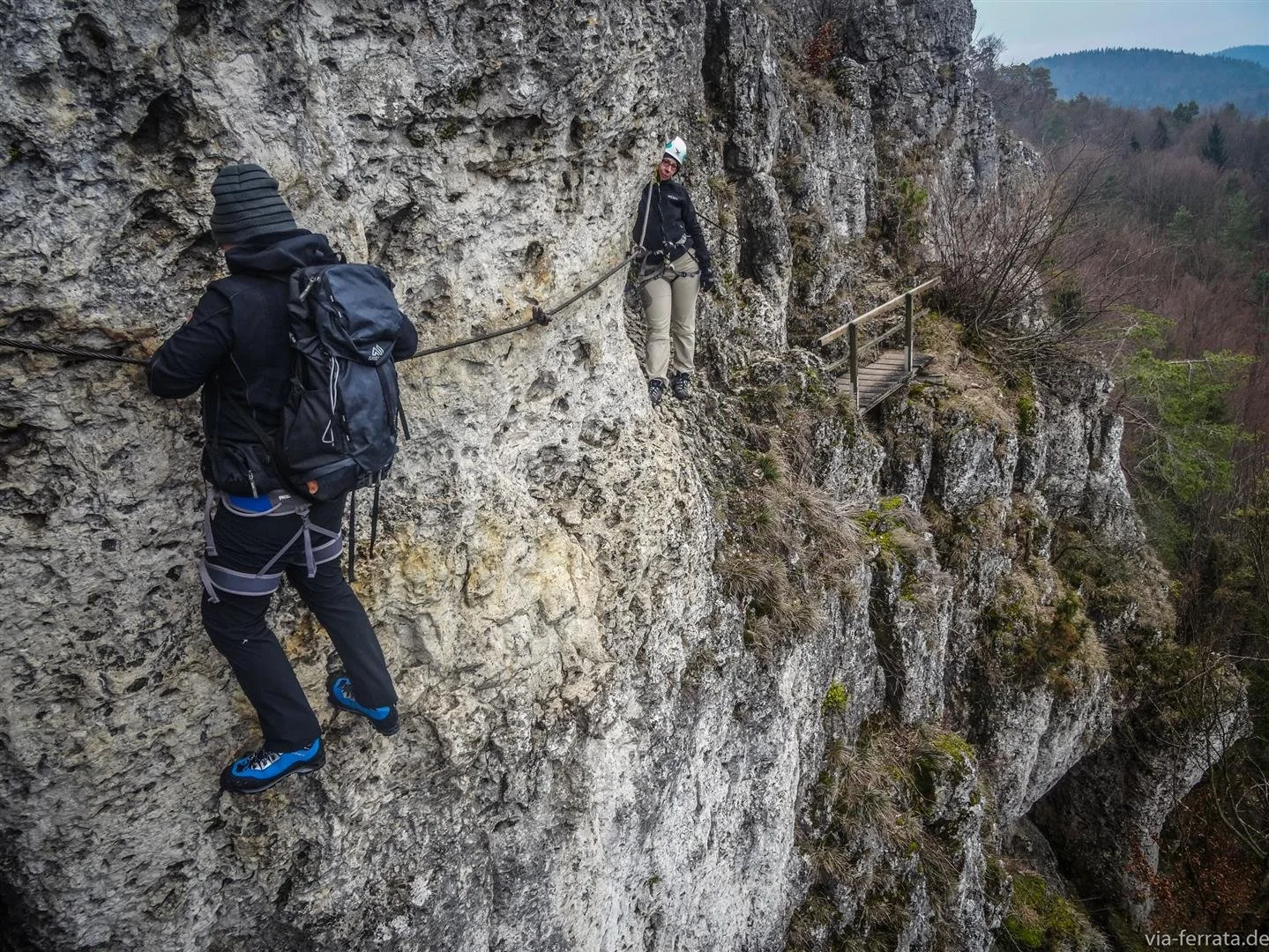
The Höhenglücksteig is one of Germany’s most iconic via ferratas, set in the forested hills of the Franconian Jura near Hirschbach, Bavaria. Known for its exposed traverses, short technical sections, and playful mix of ladders, ledges, and steel cables, it is a classic route that attracts both beginners and seasoned climbers. The ferrata is divided into three main sections, allowing adventurers to tailor the experience to their skill level while still enjoying the rugged limestone terrain and panoramic viewpoints.
Trail Overview
Duration: 2–3 hours for all sections combined (1 hour for just Section 1)
Difficulty: Varies by section; generally B–C with isolated C/D moves
Best for: Intermediate ferrata users seeking a varied and engaging route; motivated beginners with supervision; climbers who enjoy technical movement close to the ground
Exposure: Moderate to high in certain traverses and ridge passages
Required gear: Standard via ferrata set (EN 958-certified lanyard, harness, helmet), gloves recommended; climbing shoes or sturdy approach shoes
Route Description
The Höhenglücksteig is divided into three distinct sections, each offering its own character.
Section 1 introduces the route with moderate climbing, gentle traverses, and secure ledges along sharp limestone walls. It is the easiest and most suitable for first-timers, offering a good mix of vertical steps and horizontal movement.
Section 2 increases the challenge with steeper passages, exposed ridgelines, and narrow footholds that demand balance and confidence. Short vertical climbs and airy crossings define this portion, making it popular among experienced adventurers.
Section 3 is the most technical, presenting a few demanding C/D moves that require upper-body strength and precise footwork. The limestone formations become steeper and more complex, culminating in a rewarding finish on a scenic ridge overlooking the forested valley.
Because the route runs parallel to the forest floor, escape paths exist between sections, allowing climbers to exit or join at multiple points.
Highlights
A varied and entertaining route divided into three sections adaptable to different abilities
Rugged limestone formations typical of the Franconian Jura
Airy traverses and ridge crossings that deliver a strong sense of exposure
Multiple entry and exit points offering logistical flexibility
Forested surroundings that keep the route shaded and comfortable in warm weather
Difficulty and Required Skills
The Höhenglücksteig ranges from moderate (B/C) to challenging (C/D) depending on the chosen sections. Climbers should be comfortable with vertical exposure, secure in basic via ferrata techniques, and able to maintain controlled movement on small footholds.
Beginners can enjoy Section 1, but Sections 2 and 3 require stronger climbing skills, good balance, and upper-body strength. The route’s exposed traverses and narrow ledges make mental composure equally important. Proper equipment and secure clipping technique are essential for safe progression.
When to Go
The best period to climb the Höhenglücksteig is from April to October, when conditions are dry and daylight hours are long. The shaded forest environment allows for comfortable temperatures even during summer. Avoid the route after heavy rain, during storms, or in winter conditions, as limestone becomes slippery and hazardous.
Access and Logistics
The via ferrata is located near the village of Hirschbach in Bavaria, Germany. Parking is available at local trailheads, from which a short forest path leads to the base of the route. The approach typically takes about 10–20 minutes depending on the chosen starting section.
The area is well-marked with signs directing visitors toward each portion of the ferrata. Because the route lies within a popular outdoor region, expect some traffic during weekends and holidays.
Why It Belongs on Every Adventurer’s List
The Höhenglücksteig stands out for offering a high-quality via ferrata experience in a compact, accessible format. Its combination of technical moves, exposed traverses, and scenic forest landscapes makes it both exciting and memorable. Whether used as a training ground or as an adventure in its own right, it showcases the charm of the Franconian Jura and provides a rewarding challenge for climbers of varying skill levels.