Via Ferrata du Sautet – La Motte-Saint-Martin
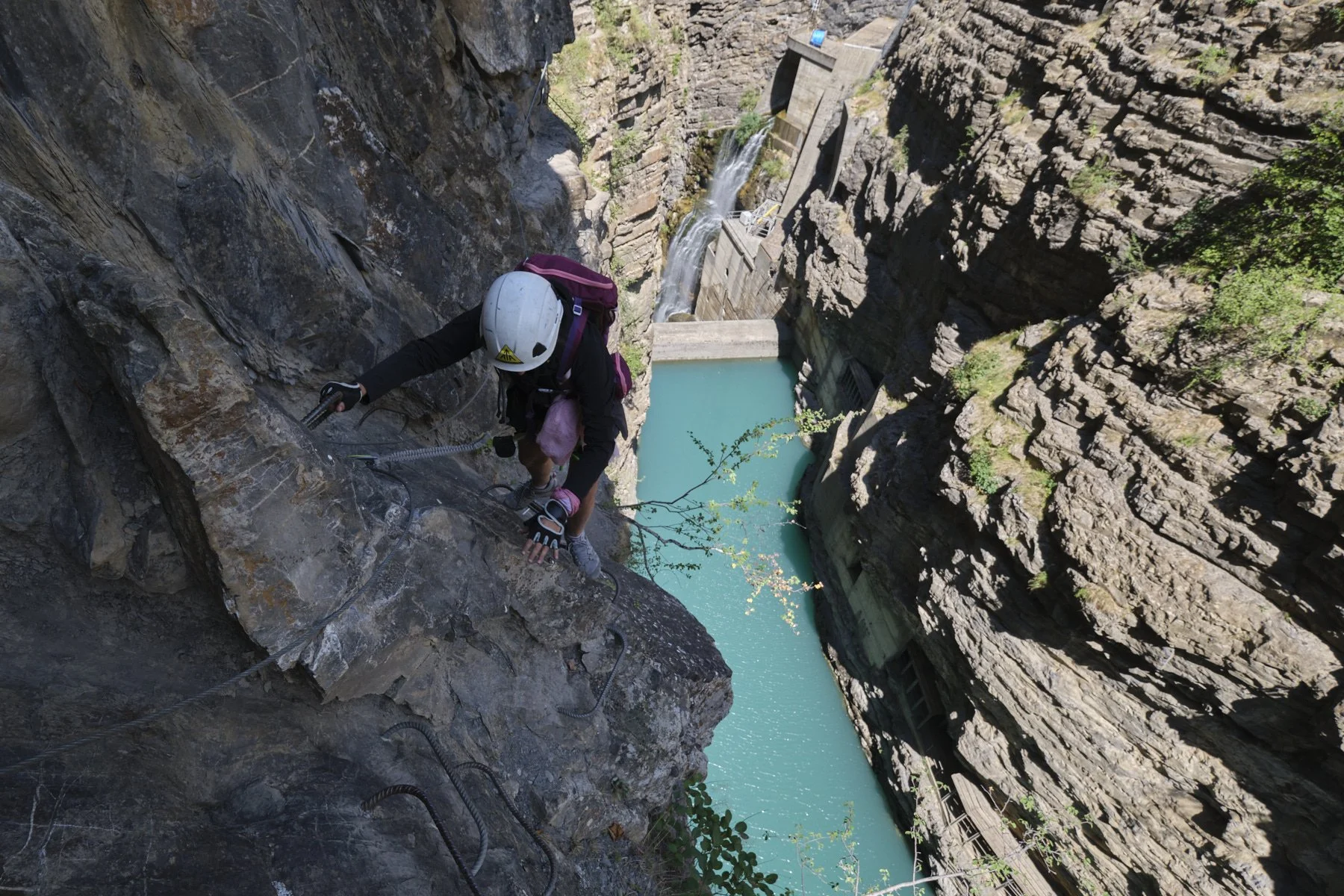
Tucked into the dramatic gorge of the Lac du Sautet, near La Motte-Saint-Martin and Corps in southeastern France, the Via Ferrata du Sautet offers a thrilling blend of vertical rock, bridge crossings and impressive views over turquoise water. It is sometimes called “Le Grand Frisson” (“the big thrill”) thanks to its exposed traverses and aerial passages.
For outdoor adventurers seeking a memorable experience that combines rock-face climbing with nature’s spectacle, this via ferrata delivers. Below you’ll find a detailed overview to help plan your outing.
Trail Overview
Location: Along the Barrage du Sautet, on the border of the Isère and Hautes-Alpes departments, France.
Vertical gain: Approximately +160 metres from base to finish.
Duration: About 2 to 3 hours for the standard route.
Difficulty rating: Generally graded PD (“peu difficile”, i.e., not very difficult) but with strong aerial sections and some exposure.
Minimum age / suitability: Recommended for ages 10+ as per local guide information.
Route type: Via ferrata (iron-path) – fixed cables, steel rungs, suspension/foot bridges and vantage points over the gorge.
Route Description
Approach & Start
The approach is brief — about 10 minutes of walking from the parking/meeting point near the dam. You arrive at the base of the cliff above the Lac du Sautet or the gorge.Climb & Traverse
The route begins with a vertical ascent along fixed rungs, then continues with traverses above the gorge. One of the standout features is a suspension bridge or foot-bridge spanning the gap, offering a heart-racing view down to the water and rock below.Second Section & Finish
After the bridge and traverses, there may be another climb beneath or near the dam structure itself before reaching the exit. At that point, one can descend the path back to the start point.Return
The descent path is straightforward; often the same way back or via a marked return trail. Total outing time including approach and descent: around 3 hours.
Overall, the route is exposed rather than technically demanding — meaning that while climbing equipment is needed, the movement itself is not as hard as high-mountain via ferratas. It shines for the sensation of height and the setting.
Highlights
Spectacular gorge & water views: The turquoise colour of Lac du Sautet or the river below the cliff adds dramatic contrast to the rock and sky.
Suspension/foot-bridge crossing: One of the most memorable moments of the route — high above the void, swaying slightly, with the rock face and water beneath.
Vertical steel rungs & cables: Gives a genuine “climb” feel even for less technical climbers.
Accessible start & uplifting finish: Minimal approach means you can focus on the experience on the cliff rather than a long trek in/out.
Great for a half-day adventure: Fits well into a day of hiking or outdoor exploration in the region, making it a perfect addition to a broader alpine outing.
Difficulty & Required Skills
Physical fitness: Moderate. You should be comfortable climbing rungs and being exposed above heights.
Technical skills: Basic via ferrata skills (clip/unclip lanyards, manage safety cable, use harness). The route does not demand full rock-climbing or mountaineering competence.
Exposure: High. There are sections with large drops and minimal ground beneath you. People with fear of height need to be cautious. One commentator noted: “Not for people with fear of height, as sometimes there is nothing below you but a metal bar and the river.”
Equipment: Recommended helmet, harness, via ferrata lanyard with shock absorber, gloves, good hiking or approach shoes. For younger participants, ensure appropriate size and weight (minimum ~40 kg cited).
Navigation/route marking: Clearly marked and maintained. Some local guide companies offer equipment and supervision.
When to Go
Best season: From May to October, when the route is open and rock conditions favourable.
Times of day: Morning or early afternoon is preferable to avoid heat on sun-exposed rock and to have better light for views.
Weather caution: Avoid in heavy rain or storms – rock and metal gear become slick, water levels in gorge may change, and metal structures can be slippery.
Crowds: Because of the relatively short approach and accessibility, it can be popular during peak summer; consider early arrival if you prefer fewer other groups.
Access & Logistics
Nearest village/town: Corps (Isère) region, at the Barrage du Sautet.
Parking/meeting point: There is a parking/nautical base (Wild Sport Adventure) near the dam where equipment rental is available in summer.
Transport: By car from Grenoble/Gap via the Route Napoléon (RN85).
Rental & guide options: Equipment rental available in July/August from the local base; guides available for groups/children.
Return logistics: The descent is short and direct; ensures you are back to your vehicle within the 3-hour timespan.
Extra time buffer: Allow extra time for gearing up, briefing and photos — total outing may take 4 hours or more if you stop to enjoy scenery.
Why It Belongs on Every Adventurer’s List
For those seeking an alpine-edge adventure that is still accessible, the Via Ferrata du Sautet checks the boxes. It offers:
A dramatic vertical experience without the commitment of a full multi-day alpine climb.
Stunning scenery that delivers “wow” moments — turquoise water, towering cliffs, exposed traverse bridges.
A half-day format that perfectly complements hiking days, making it ideal for your All Alps gear and storytelling.
A sense of accomplishment: whether you’re a seasoned hiker looking to push into vertical terrain or someone new to via ferrata, this route gives real exposure with manageable technical demands.
Unique photographic opportunities: the combination of rock, water, altitude and engineered crossing make for striking visuals that will resonate with your All Alps audience of nature lovers and outdoor photographers.
If you’re crafting content for Instagram or drone footage, this spot delivers a dramatic vertical narrative that sits beautifully alongside your hiking and alpine themes.