Via Ferrata du Diable
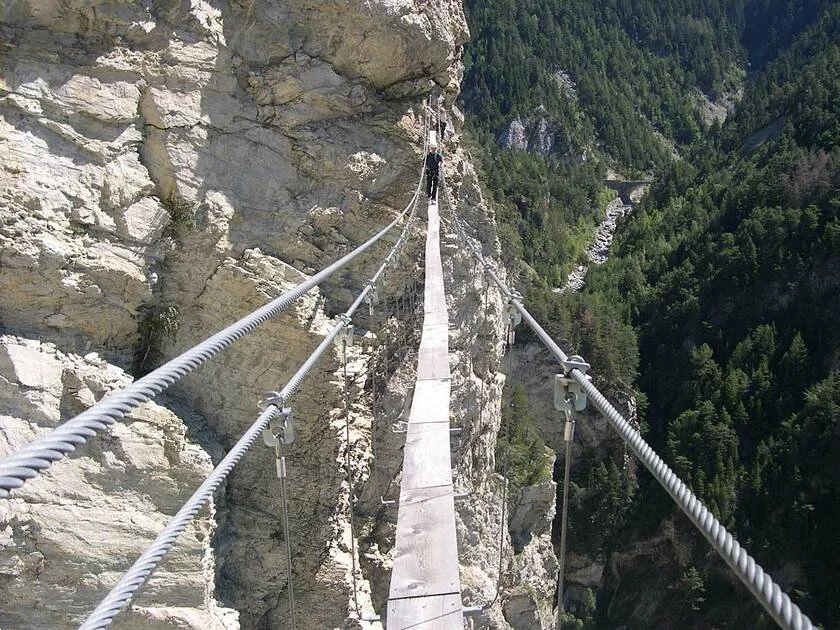
Tucked into the dramatic gorges of the Arc river near Aussois in the Savoie region of France, the Via Ferrata du Diable delivers a thrilling alpine experience combining steel rungs, suspension bridges, vertical walls and historic fortifications. Over the course of around 3.7 km (in one continuous loop) or more if you explore its segments, this via ferrata spans seven distinct sections of varying difficulty — making it both versatile and epic for adventurers seeking height, exposure and exhilaration.
Trail Overview
Location: Aussois, Maurienne Valley, Savoie, France.
Route length: Approximately 3,760 m when all seven segments are linked.
Elevation change: Varies by section, but the full loop has considerable vertical — some sources cite +550 m cumulative for parts of the route.
Structure: Seven independent but connectable segments, each with its own name and character.
Setting: The route weaves between the historic forts of the Barrière de l’Esseillon (notably the Fort Victor‑Emmanuel) and the steep, sheer limestone cliffs that drop into the gorge of the Arc river — offering panoramic views and serious exposure.
Route Description
Approach – From Aussois village drive or hike up to Fort Victor-Emmanuel (~1,350 m), which serves as a base for access to the via ferrata. The atmosphere already sets the tone: historic fortification meets alpine rockface.
Start segments – The via is divided into segments from easier sections (suitable for less experienced ferrata climbers or families) to more technical, steep, exposed parts. Each part has an escape route.
Core climbing sections – Expect vertical or near-vertical walls, traverses, steel rungs, suspension footbridges, and rock slabs traversing the overhangs of the gorge. One iconic feature: a Nepali (rope) bridge ~80-90 m long suspended deep above the river.
Historic Fort finishes – Some segments finish in or around fortifications, blending alpine adventure with military-architecture heritage. The loop then returns you to Aussois or the fortress base.
Descent – After finishing the climbing sections, descend via marked paths back toward Aussois or to the base parking.
Highlights
Exposure & adrenaline – With cliff faces plunging into the gorge and massive height above the river, each step is memorable.
Historic setting – Climbing among the forts of the 19th-century Barrière de l’Esseillon adds a rich historical dimension.
Variety of segments – From easier sections for beginners to “very difficult” combinations of overhangs and high bridges, the via offers something for a wide range of ferrata enthusiasts.
Panoramic views – The Maurienne valley, neighbouring peaks, cliffs, river far below; perfect for photography and drone captures (where allowed).
Route integration – The fact that you can link multiple segments into a longer circuit (loop) makes it more than “just a via ferrata” — it becomes almost a half-day alpine adventure.
Difficulty & Required Skills
While some sections are labelled as “easy” or accessible, many of the core segments of Via Ferrata du Diable are demanding and require strong physical fitness, sure-footedness, and no fear of heights.
The French grading system used for some parts rates segments as AD (Assez Difficile) to TD (Très Difficile).
Key skills/equipment:
Via ferrata set (helmet, harness, via ferrata lanyards with energy absorber).
Good climbing gloves (for steel rungs).
Sturdy mountain shoes with good grip.
Basic rope and rescue knowledge is a bonus (especially for upper segments).
The ability to ascend vertical/overhanging terrain and traverse exposed footbridges.
Because of the variable levels and many segments, choosing your route according to your skill level is important. One can start with easier segments and skip the hardest ones if needed.
Weather impact: Wet cliffs, ice, wind can drastically increase difficulty — advisable only in good conditions.
When to Go
The via is accessible year-round, but the best conditions for climbing are in the late spring to early autumn (roughly April to October). Outside this window there may be snow/ice, and the gorge wind may make things tricky.
Early morning starts are recommended to avoid midday heat/rockfall risk and to benefit from softer light for photography.
Avoid going in heavy rain or thunderstorms — the exposed bridges and metal structures can become hazardous.
Depending on season, crowds may vary — for a more serene experience go in shoulder season (May or September).
Access & Logistics
Getting there: Drive (or public transport + taxi) to Aussois village in the Maurienne valley. From Aussois, continue up to Fort Victor-Emmanuel parking area (road D215F) — this is the trailhead.
Parking: There is a parking area near Fort Victor-Emmanuel.
Equipment rental/guide: Local outdoor shops in Aussois offer via ferrata equipment rental. If you are unfamiliar with long exposed ferratas, hiring a mountain guide is recommended.
Time required: For all segments linked, expect 6 to 8 hours depending on fitness and breaks. For selected segments shorter durations are possible.
Cost: Many segments are free access, though guided/paid options may apply for equipment rental or specialised segments. Check local regulations.
Safety & preparation: Inform someone of your plan, carry mobile phone, first-aid kit, water, food. Even though the via has fixed protection, it remains a mountain environment.
Descent: Use marked descent trails or the same approach route back to Aussois. Note: tired arms/legs after via ferrata climbing — ensure descent is within your capacity.
Why It Belongs on Every Adventurer’s List
It combines intensity and accessibility — not every via ferrata offers such a length, variety and setting in one experience.
The dramatic canyon and gorge landscape, with multiple bridges and vertical climbs, makes it more than “just a route” — it becomes an alpine adventure story.
The setting at the crossroads of historic fortifications and raw mountain rock gives a unique cultural and experiential twist.
For the content creator (like you) this route offers killer visuals: suspension bridges, sweeping valley drops, steel rungs in alpine rock—all perfect for your outdoor photography and video storytelling for the AllAlps / All Hiking brand.
It caters to a wide spectrum: those wanting a challenging thrill can push the harder segments; those newer to ferratas can select easier ones — making it inclusive while still epic.
Completing a long via ferrata loop like this builds confidence and credentials for even bigger alpine challenges — it’s a stepping-stone toward grander traverses and hikes.