Via Ferrata du Baus de la Fréma
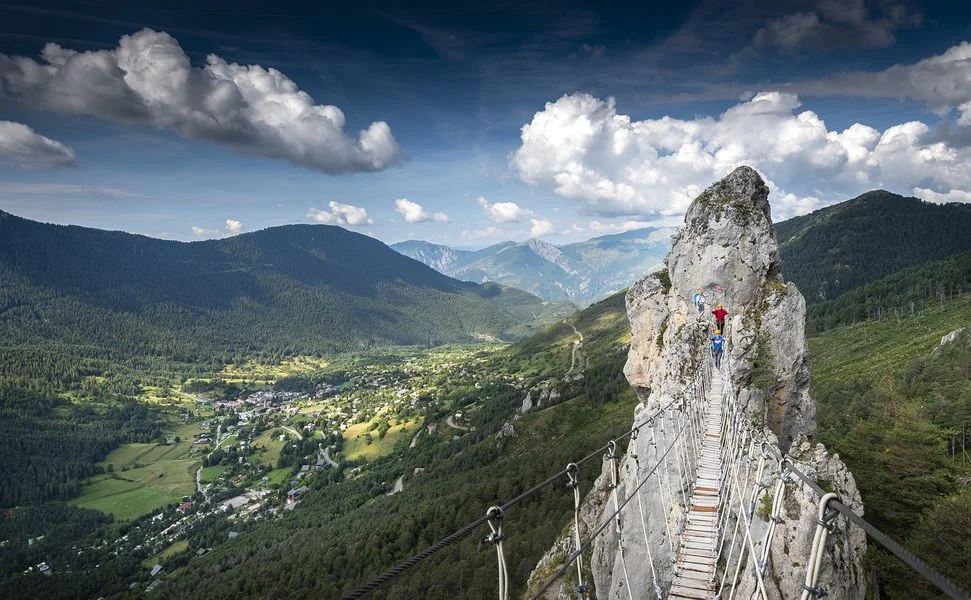
Tucked away in the heart of the Southern French Alps, the Baus de la Fréma via ferrata offers one of the most thrilling “climb-and-walk” experiences near the Côte d’Azur. Starting above the ski-station of La Colmiane (Valdeblore, Alpes-Maritimes), the route spirals up the rugged limestone ridge to the summit of the Baus de la Fréma (2 246 m), weaving through rock walls, suspension bridges, ladders and exposed corridors. It’s a true alpine adventure that combines hiking stamina with vertical thrills — a perfect fit for your All Hiking brand’s “Alpine adrenaline” series.
Trail Overview
Location: La Colmiane / Valdeblore, Alpes-Maritimes, France
Type of route: Via ferrata (secured climbing/hiking route)
Length: ~1 600 m of equipped climbing sections.
Elevation gain: ~500–570 m from approach to summit.
Summit height: 2 246 m at Baus de la Fréma.
Typical duration: 4 – 5 hours including approach and descent.
Difficulty rating: Listed as “Difficult (D)” in via-ferrata grading.
This is not simply a scenic hike — it’s a semi-vertical alpine route that demands both physical effort and mental composure. The terrain, exposure and special features make it a standout in the region.
Route Description
The route begins with an approach trail from the parking above La Colmiane, winding upward through forest before reaching the rock face where the via-ferrata installations begin. After gearing up (helmet, harness, via-ferrata lanyard), you enter the first section:
Section 1 – “The Bridge”: Early on you’ll cross a narrow footbridge (about 30 cm wide) and then a swaying bridge between two rock arms, about 20 m above the void, creating an immediate theatrical entrance into the route.
Section 2 – Ridge and Overhangs: After the bridge, you climb steeply up the ridge, passing through rock protrusions, vertical ladders and overhangs. The route pushes you into sustained vertical terrain.
Section 3 – The Grotte & Ladder: One of the most memorable parts is a cave (grotte) section followed by an inverted ladder, where you climb looking outward into space. This adds a heavy dose of exposure and drama.
Section 4 – Suspension Net / Monkey Bridge: A later part features a “pont de singe” or monkey bridge/suspension net, linking rock features and testing your balance and nerves.
Summit Approach & Descent: The final push reaches the summit ridge of Baus de la Fréma. From there you enter a marked descent trail that leads back toward the parking, often on forested slopes and exposed steps.
The route includes several “échappatoires” (escape routes) allowing less experienced climbers to bypass the hardest sections.
Highlights
Sky-high exposure: That initial footbridge sets the tone: you really are suspended above the landscape, combining hiking with aerial thrills.
Panoramic summit views: At 2 246 m, the top offers sweeping views over the Mercantour range, Tinée and Vésubie valleys and the deep blue of the Mediterranean horizon on a clear day.
Varied terrain and structures: From ladders and cables to nets and bridges, the route mixes physical challenge with vertical playground elements.
Accessible from the Côte d’Azur: Despite its high-alpine feel, you’re only about 80 km inland from Nice, making it a relatively easy escape into big mountain scenery.
Historical significance: Recognised as one of the first via-ferratas developed in the Alpes-Maritimes region, it’s both legendary and spectacular.
Difficulty & Required Skills
This route is classified as Difficult (“D”) in the French via ferrata grading system. It demands:
Good physical fitness: Sustained ascent with ladders, overhangs and exposure require strength in legs, core and arms.
Surefootedness & no vertigo: Many sections are high above ground and sense of height is acute. If you’re prone to vertigo, these sections will challenge you.
Basic climbing/hiking competence: While you don’t need full rock-climbing skills, you should be comfortable with secured vertical terrain and be familiar with via-ferrata equipment (harness, lanyard, carabiners).
Proper equipment: Helmet, via-ferrata lanyard with energy absorber, harness, gloves for gripping metal rungs/ cables, hiking boots with good grip.
Weather & route knowledge: The exposed nature of the ridge makes the route risky in bad weather (rain, thunder). Check conditions ahead.
In short, this is not a beginner’s via-ferrata: it’s for adventurous hikers with some experience and a genuine appetite for exposure and vertical movement.
When to Go
Best season: Late spring to early autumn (typically May to October) is ideal. In early summer you’ll find full water flow, and autumn brings fewer crowds and crisp alpine air.
Avoid: Rainy days, thunderstorms, or early season when snow patches may linger. The metal structures become dangerous when wet.
Time of day: Start early in the morning to beat the heat, avoid crowds, and secure parking. Afternoon thunderstorms are a risk in mountain terrain.
Conditions: Sunny aspect (south-facing ridge) means the route warms up nicely, but strong winds at the ridge must be considered.
Access & Logistics
Arrival by road: From Nice, drive via the Tinée Valley (D2205) and then D2565 up to La Colmiane/Valdeblore. Then follow the signage to the via-ferrata parking area accessed by a partly unpaved forestry track.
Parking: There is a car park at the start of the via-ferrata. A ticket may need to be purchased at the holiday centre or kiosk.
Duration & return: Approach to start takes ~1 h; the via-ferrata climb ~4-5 h; descent ~1-1.5 h. Plan a full half-day for the activity.
Costs: There may be a small access fee or ticket at the start.
Accommodation: Base yourself in La Colmiane or Valdeblore, or in Nice if you’re combining costal stay with mountain adventure.
Gear rental & guiding: Check with local guides or outdoor centres in Valdeblore/La Colmiane if you need to rent via-ferrata gear or want a guiding service.
Why It Belongs on Every Adventurer’s List
The Baus de la Fréma via ferrata delivers a full spectrum of alpine adventure in one route: exposure, climbing, panoramic peaks, forested approaches, and high-summit reward. It’s the kind of route that tells a story: you walk into the mountain, you climb across the void, and you arrive on a ridge with sweeping views. For the audience of your All Hiking brand — hikers, outdoor photographers, wanderers between mountain and sky — it represents a perfect blend of accessible thrill and epic scenery. Few other via-ferratas combine dramatic features (monolithic ladders, suspension nets, bridges) with an alpine summit so cleanly. It’s a must-do for anyone who wants to step beyond regular hiking into something vertical, airy, and unforgettable.