Via Ferrata des Gorges de Daluis
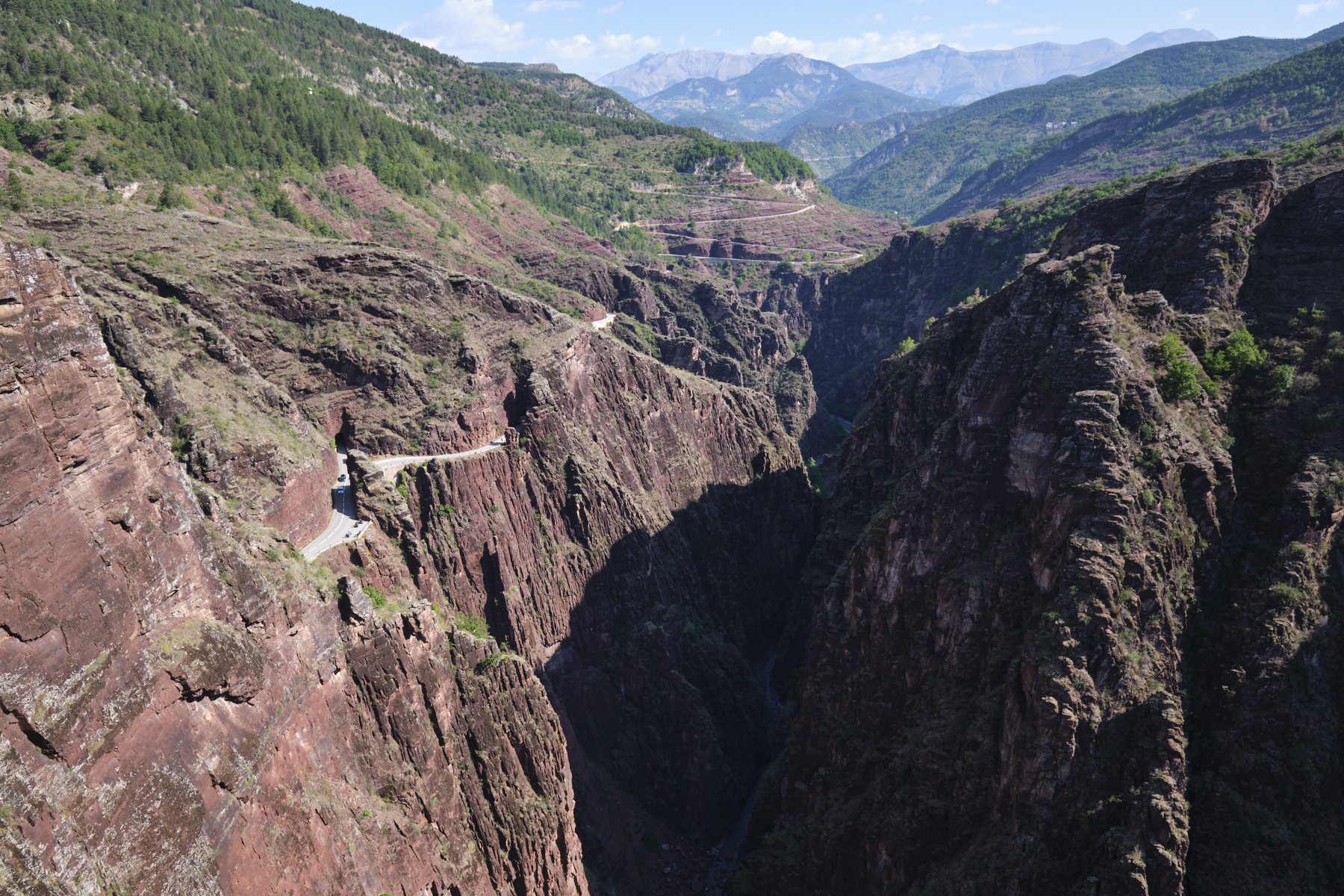
Nestled in the heart of the Alpes-Maritimes in southeastern France, the Gorges de Daluis — often dubbed the “Colorado Niçois” for its striking deep red schist walls — offers more than just a scenic drive. For the adventurous, the via ferrata that winds the canyon gives a thrilling vertical dimension to the experience. Where steep cliffs plunge almost vertically into the river below and narrow tunnels cut through rock, the ferrata route transforms this iconic gorge into a high-altitude playground of vertical exposure, iron rungs and breathtaking panorama.
Trail Overview
Location: Gorges de Daluis, Alpes-Maritimes, Provence-Alpes-Côte d’Azur, France
Terrain: Canyon carved by the Var river, red schist cliffs up to ~300 m high
Route type: Via ferrata / equipped climbing trail through steep rock face
Access & finish: Typically starts in the valley above Guillaumes (or Daluis) and traverses the gorge environment
Notable features: Red coloured pelite rock, tunnels, cliff-edge path, the “Pont de la Mariée” bridge and dramatic canyon panorama
User profile: For hikers/ climbers comfortable with via ferrata equipment and exposure
Route Description
The route begins at the edge of the canyon where paths lead to the rock-walls of the gorge. Climbers attach their harness to the steel cable system fixed into the schist rock and ascend or traverse along shelves, rungs and possibly short ladders or foot-holds. The line winds along the cliff above the river, offering moments of sheer vertical drop and dramatic views of the red rock corridor. At one key point you may pass near the iconic Pont de la Mariée — 80 metres above the river — adding to the vertigo and immersion in the canyon’s geology. Along the climb, tunnels cut into the rock, panoramic belvederes and the open canyon sections provide a mix of climbing, walking and exposure. The descent typically follows a marked path from the upper section down to the valley floor, or returns via a secure trail, depending on the exact start and exit points. The route’s character is canyon-climb rather than high-alpine ridge: expect strong visuals, steep walls, but lower altitude.
Highlights
Spectacular geology: The red pelite rock of the gorge, more typical of the “Colorado” style canyons than alpine grey limestone, gives the setting a unique colour-and-light experience.
Vertiginous exposure: Climbing along cliff-faces with the Var river far below, and passing near historic structures like the Pont de la Mariée, offers an adrenaline shot for moderate-level climbers.
Canyon ambience plus via ferrata thrill: Unlike many alpine ferratas, the canyon atmosphere (tunnels, narrow gorge, deep cliffs) makes the experience immersive and dramatic.
Accessibility & wild landscape combined: Though remote in feel, the route lies within reach of the valley village of Guillaumes, making the logistics manageable.
Unique flora & fauna backdrop: The gorge is part of a regional nature reserve, with special geology and biodiversity adding richness to the climb.
Difficulty & Required Skills
This route is more demanding than a simple hiking trail but not the most extreme high-alpine via ferrata. Key demands include:
Correct via ferrata equipment: helmet, harness, via ferrata lanyard with shock-absorber, gloves, sturdy shoes.
Good head for heights and comfort on exposed rock ledges. The drop below and cliff walls mean exposure is constant.
Basic climbing / scrambling ability: some sections may require arm strength, balance and coordination on rungs or cables.
Physical fitness: while not ultra-long, the vertical nature and sustained climbing will fatigue less prepared participants.
Weather & rock-condition awareness: the canyon environment can change (wet rock, wind, tunnel sections etc).
Given those, this via ferrata suits adventurous hikers with moderate via-ferrata experience — not beginners without training. Because detailed grading for this exact route is hard to find, assume a moderate-to-difficult level and treat with respect.
When to Go
Best season: Late spring through early autumn (roughly May to September) offers optimum weather, dry rock and accessible trails.
Avoiding crowds: Early morning start recommended to avoid visitor peaks in the gorge and to catch softer light for photography.
Weather caution: Afternoon thunderstorms, especially in summer, can make the rock slick and metal fittings dangerous — check forecasts.
Lower seasons: Outside summer, risk of wet rock or cold conditions increases — ensure the route is still open.
In short: aim for stable weather, weekdays if possible, and be ready for canyon-micro-climates.
Access & Logistics
Start point: Village of Guillaumes (Alpes-Maritimes) is the common base; from there drive or park near the gorge access road D2202 that winds through the Gorges de Daluis.
Transport: From Nice or Marseille, drive via the Var valley (D6202/D2202) toward Guillaumes. Public transport may be limited—car or van recommended.
Exit / descent: After the via ferrata segment, descend to the valley floor via marked trail back to Guillaumes or nearby parking.
Services: Accommodation and food in Guillaumes; ensure equipment & first-aid kit ready.
Permits / fees: Check local regulations—gorge is a nature reserve, so stay on marked paths and respect restrictions.
Guide option: If unsure, consider hiring a mountain guide familiar with via ferrata and canyon terrain.
Time allocation: Allow half a day (3-5 hours) including approach, climb and descent. Add more time for photos, breaks and logistics.
Why It Belongs on Every Adventurer’s List
Unique canyon via ferrata experience: You won’t find many routes that marry the sheer red-schist canyon walls of the Gorges de Daluis with a full via ferrata route.
Memorable scenery meeting challenge: Few experiences combine dramatic colour, vertical rock, flavour of Provence and technical climbing in one.
Accessible yet wild: It strikes a rare balance—challenging enough for thrill-seekers, but reachable without super-alpine logistics.
Photographic gold mine: From the crimson rock walls to the sweeping canyon vistas and the thrill of climbing above the river, it’s perfect for visual storytelling (ideal for your All Alps branding!).
Personal growth & story: Completing a route like this becomes a personal narrative for any hiker/climber—embodying adventure, risk, reward and alpine immersion.