Via Ferrata de Nans-sous-Sainte-Anne
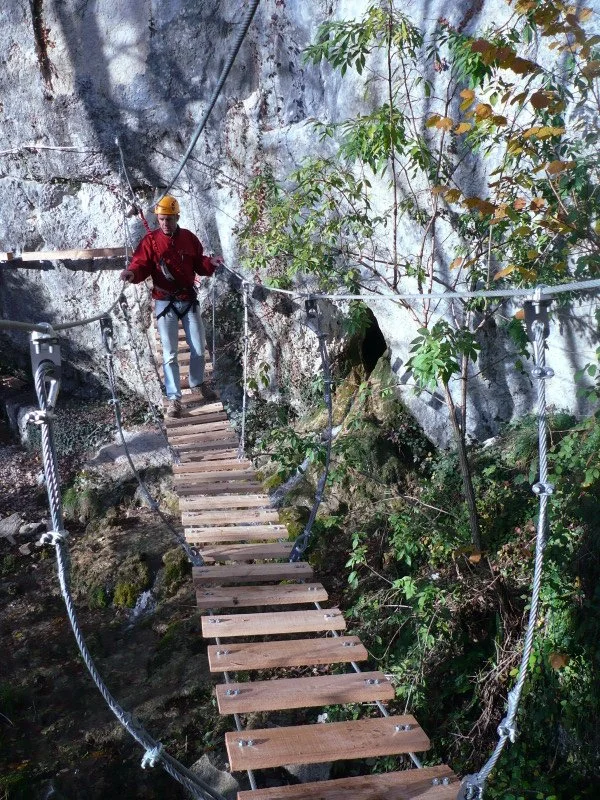
Set in the Jura Mountains of eastern France, the Via Ferrata des Baumes du Verneau offers a thrilling mix of vertical climbs, steel cables, ladders, tyroliennes (zip-lines) and dramatic limestone walls above the village of Nans-sous-Sainte-Anne. This route brings together nature, adrenaline and skill in a location characterised by deep wooded valleys, wild karst landscapes and panoramic vistas. It’s ideal for anyone looking to step beyond standard hikes and into the world of mountain adventure.
Trail Overview
Location: Nans-sous-Sainte-Anne, Doubs department, Bourgogne-Franche-Comté region, France.
Name of Route: Via Ferrata “Les Baumes du Verneau”.
Altitude Start / Finish: Approx. 550 m at the base, climbing to about 750 m (→ net gain ~200 m) in some routes.
Length & Route Variants: The ferrata comprises several segments (four main parts) with varying difficulties.
Duration: Typically 2-3 hours of climbing for the main route, plus approach and return.
Difficulty Grades: French grading system, various parts: from F (easy) up to ED (extremely difficult) for the hardest variants.
Setting: Limestone cliffs above the Verneau/ Lison valley, offering vertical exposure and strong sense of outdoor adventure.
Route Description
The Via Ferrata des Baumes du Verneau is divided into multiple segments so that climbers can select based on ability and ambition.
Approach: From the village of Nans-sous-Sainte-Anne a short walk (approx. 10 minutes) leads to the base of the route.
First Segment (Les Grandes Baumes): Begins with a gentler horizontal traverse inside a large cavernous limestone "baume". The line of steel rungs and cable is well-anchored and offers a warm-up experience.
Middle Segment (Ressaut des Chamois and Petites Baumes): Progress becomes steeper, with sections of overhanging rock, narrow ledges and bridges. Some parts require careful movement and strength in the arms.
Final Segment (Haute Falaise / Variant “Peurs & Tremblements”): The most challenging part. Overhangs, sustained climbing, possibly tyrolienne or other “fun” aerial features. This variant is rated TD/ED and recommended only for experienced climbers.
Descent: After exiting the rock face, a forest track or trail leads back down to the village. Some ropes or fixtures may assist on the descent.
Because of its multiple routes, participants may opt for a shorter, less difficult section, or challenge themselves with the full variant. Escape routes exist on some sections.
Highlights
Dramatic vertical limestone walls rising above the valley floor, giving views across the Jura karst landscape and the village below.
Multiple route options meaning this via ferrata can cater from intermediate to very advanced ferratists — flexibility is rare.
Tyrolienne or “fun” features, suspension bridges and narrow ledges giving a real sense of height and exposure.
Spectacular setting: perched above the Verneau / Lison gorge, remote yet accessible, combining nature and adventure.
Good value & short access: relatively quick approach and moderate time investment for a big thrill — great for a half-day outing.
Difficulty & Required Skills
Technical Difficulty: Because there are multiple variants, difficulty ranges from F (“facile”) to ED (“extrêmement difficile”). Several sections are rated D or TD for more advanced segments.
Physical Demand: A sustained hike/ climb for 2-3 hours, with significant upper-body usage on steeper sections. Climbers must be comfortable on vertical terrain, with good overall fitness.
Exposure: High in the upper sections — narrow ledges, significant drop-offs, overhangs. Ferrata equipment (harness/faixa, via ferrata lanyard with shock absorber) is mandatory.
Orientation / Route Finding: The route is marked, but the presence of escape options and alternate paths means climbers should be comfortable reading the terrain and choosing their line.
Equipment Recommended:
Harness + via ferrata lanyard set
Helmet (rockfall risk)
Gloves for handling cables
Good footwear (grippy, ankle support)
Comfortable clothing for climbing
Possibly pulleys for the tyrolienne if required.
Safety Notes: Since parts of the route are steep and exposed, a head for heights and no severe vertigo are essential. Weather conditions (wet rock can be slippery, lightning risk on metal fixtures) must be considered.
When to Go
Best Season: Late spring through early autumn (roughly May to October) when the rock is dry and the weather stable.
Avoid: Wet or stormy conditions — metal rungs and cables become slippery; risk of rockfall increases in freeze-thaw seasons.
Current Status Note: Be aware that parts of the route have been subject to closures / partial closure for safety/maintenance reasons. It is wise to check local information before going.
Time of Day: Morning access is recommended to avoid afternoon storms and to have the route in good lighting. The climb itself takes 2-3 hours but plan for more with approach and descent.
Access & Logistics
Getting There: The village of Nans-sous-Sainte-Anne lies in the Doubs department, Bourgogne-Franche-Comté region of eastern France. It can be accessed by road from Besançon and the Jura region.
Parking / Start Point: There is parking in or near the village; from there a short walk leads to the base of the via ferrata.
Costs / Access: Some sources indicate a small fee is collected for access and equipment rental (e.g., pulley for tyrolienne) depending on variant.
Equipment Rental / Guided Option: For less experienced participants a guide or equipment rental (especially for the more difficult variant) is advisable. Some local outfitters provide this.
Return: After completion, the descent track leads back to the village. Allow additional time for descent and basic rest.
Accommodation & Food: Nans-sous-Sainte-Anne and the surrounding valleys offer small hotels, guesthouses, picnic areas and restaurants. Combining the via ferrata with other outdoor activities in the region (canyoning, lakes, hiking) makes for a full day.
Why It Belongs on Every Adventurer’s List
The Via Ferrata des Baumes du Verneau stands out because it skilfully bridges the gap between standard hiking and full-scale alpine climbing. For lovers of the outdoors who want to raise the pulse and explore vertical terrain without committing to full mountaineering, this route hits a sweet spot.
The combination of spectacular rock scenery, multiple route difficulties, exposure, and the dramatic Jura setting make it a memorable outing. It allows you to feel like a climber for a few hours, with the safety of fixed cables and ladders, in a location that’s accessible yet wild. Whether you’re tick-boxing via ferratas or simply seeking one of the most engaging climbing experiences in the Jura, this route deserves a spot on your list.