Via Ferrata de les
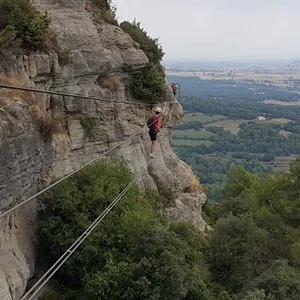
Tucked into the limestone cliffs above the small Catalan town of Centelles (Osona, Barcelona province), the Via Ferrata de les Baumes Corcades offers a thrilling blend of vertical rock, swaying suspension bridge and panoramic vistas of the Catalan interior. It’s one of the region’s most iconic via ferrata routes, packing in adrenaline and scenery in a relatively accessible setting, making it an ideal “adventure highlight”.
Trail Overview
Name: Via Ferrata de les Baumes Corcades
Location: Centelles, Osona region, Catalonia, Spain
Length / Elevation gain: ~600 m in length, ~200 m elevation gain.
Time required: Approx. 3–4 hours including approach and return.
Difficulty rating: Intermediate–demanding via-ferrata, rated K3–K4 (some sources indicate up to K4/K5 for tougher variants) in the Spanish system.
Key features: Vertical sections, overhangs, long Nepalese suspension bridge (~68–70 m), panoramic viewpoint at the summit of Puigsagordi (~972 m altitude).
Route Description
The route begins with a short walk from the designated parking/meeting spot up to the base of the cliff. After gearing up, climbers enter the first section: a relatively moderate ascent with fixed metal rungs and cables that warm up the body and the mind.
Section 1: A vertical but manageable beginning that allows you to settle into the rhythm of via ferrata climbing — iron steps, secure cable, moderate exposure.
Section 2: Here the route raises the stakes: you encounter the famous Nepalese suspension bridge, nearly 68–70 m in length, that spans a deep gorge. Crossing it gives a surge of adrenaline and an extraordinary sense of exposure.
Section 3: After the bridge the terrain increases in technicality: steeper overhangs, traverses along the cliff face, and a ladder or two leading to the upper face. The summit of Puigsagordi offers the culminating view: sweeping views across the Osona plain and the Montseny / Guilleries landscape beyond.
The descent is by a marked path returning to the base. The full experience, from start to finish, blends technical climbing with dramatic scenery and a strong sense of achievement.
Highlights
Nepalese Suspension Bridge (~68 m): Probably the signature moment of the route—high above the ground, suspended in the air, with panoramic views.
Vertical and Overhanging Rock: For via ferrata enthusiasts the rock faces, overhangs and fixed equipment ensure this isn’t just a viewing affair—it demands effort and engagement.
Spectacular Views: At the summit the panorama opens across the plain of Vic, the Pyrenees foothills and the Montseny massif.
Accessibility near Barcelona: Located only about 45–60 min from Barcelona, it combines accessibility with serious climbing terrain.
Variants for different levels: While the full route is challenging, simpler variants exist to allow less experienced climbers to join in.
Difficulty & Required Skills
This via ferrata is not a beginner stroll—it is clearly marked as intermediate to advanced in difficulty. The main skills and considerations:
Good upper-body strength, confidence in exposed terrain, and surefootedness.
Familiarity with via ferrata equipment: harness, via-ferrata lanyard with energy absorber, helmet, gloves.
Ability to handle ladders, overhangs and suspension structures (bridge).
Some experience in vertical terrain will greatly increase safety and enjoyment.
Technical rating around K3–K4, with optional sections pushing to K4–K5 for those wanting extra challenge.
Because of the exposure and physical demands, weather, rock conditions (freshly wet rock can be slippery) and light conditions matter.
When to Go
Best season: Spring through to early autumn (April–October) is ideal, when weather is stable and rock dry. Some providers state “all year” but caution with winter conditions.
Avoid peak hours: Given its popularity (especially among Barcelona day-trippers), early starts or weekday visits will ensure fewer crowds.
Time of day: Morning or late afternoon offers better light for photography and cooler temperatures. Mid-day in summer can be hot and busy.
Weather caution: Rock and metal rungs become slippery when wet; thunderstorms can make exposed sections highly dangerous.
Access & Logistics
Getting there: From Barcelona, drive north towards Centelles in the Osona region. Approximate time: 45–60 minutes. Some guides mention R3 train to Centelles + local access for simpler ascent.
Meeting point: Most commercial providers meet at a designated parking near the base of the route.
Equipment: Bring your own via-ferrata kit (harness, lanyard, helmet) or book with a guided company providing gear.
Reservations: Because of its popularity and single-track nature, bookings (especially with guides) are strongly advised, especially at weekends.
Duration: Plan for half-day activity; allow 3–4 hours including approach, climbing and descent.
Return: Footpath descent leads back to base; ensure you have water and some snacks.
Why It Belongs on Every Adventurer’s List
The Via Ferrata de les Baumes Corcades hits the sweet spot: dramatic exposure, technical challenge and spectacular views—all within a 60-minute escape from Barcelona. For anyone building a profile of iconic vertical experiences in the Alps-and-beyond landscape, this route offers:
A memorable highlight (the Nepalese bridge) that distinguishes it from many simpler climbs.
A compact-but-intense adventure that works as a day trip, perfect for a multi-modal alpine/trail portfolio.
A route that combines climbing kinetic energy with panoramic stillness—once you hit the summit and look out across the valley you’ll feel the reward of the effort.
Cultural bonus: Catalonia’s landscapes and proximity to civilisation make this via ferrata accessible yet wild—a great example of how nature and adrenaline can meet.
Whether you’re shooting for an “adrenaline plus view” tick-list or simply want to push your vertical comfort zone, this route deserves a place on your map.